Living in Indonesia, A Site for Expatriates
Check out What's New on the Expat Web Site
Information for people relocating to Indonesia
Links to hundreds of articles giving practical information for expats moving to Indonesia
Post your questions or communicate with other expats in Indonesia on the Expat Forum
Looking for a place to stay in Indonesia - check out the Housing Forum
Home » Practical Information »

Mixed Marriages: Indonesians and Expatriates

Practical Information for foreigners, expats and expatriates moving to Indonesia - find out about housing, schooling, transport, shopping and more to prepare you for your stay in Indonesia

Wijaya and Company Law Firm - Jakarta

This page is generously sponsored by Wijaya & Co Law Firm

Looking for a weekend or holiday getaway ... visit some of Indonesia's Great Escapes
Some great restuarants in Jakarta
Advice and resources for conducting business in Indonesia
Info on expatriate community organizations in Indonesia
Shops, Products and Services
Links to other useful Indonesian or expat-related web sites
Expat Humor - spread the joys of Living in Indonesia through e-postcards
Site Map
Return to the Home Page

"What Indonesian Law says about Your Marriage and Family"

Find out in a Seminar to be held on Saturday, March 20, 2010 at JW Marriot Hotel, Jakarta.

Seminar will be conducted in Bahasa Indonesia and English. There are two sessions conducted in English and two other sessions in Bahasa Indonesia.

This is an event for you to meet with other mixed-marriage couples and receive and share information on the common issues of mixed marriages in Indonesia by consulting with legal experts in family and matrimonial laws in Indonesia. Click here to download the seminar flyer.

Legitimacy of Children Born in Indonesia New article

Channel on the Expat Forum for mixed couples!

Expatriate Men Married to Indonesian Women

Expatriate Women Married to Indonesian Men

Interesting Articles/Links for Mixed Couples

Portraits of our Kids - share your kids pics with the community!

Our thank to Olivier Rula for all his help with updates on this page in Sept. 2008!

There are many married couples in Indonesia where either the wife or husband is a foreigner and the spouse is Indonesian. Indonesian government regulations do NOT treat these two circumstances in the same manner. Many of the regulations that apply to foreign wives of Indonesian men are very different than those that apply to foreign husbands of Indonesian women.

We will attempt to touch on our understanding some of the pertinent regulations that affect the lives of people in these marriages. Be forewarned that there is GREAT leeway in the regulations. Some people find that they can wind their ways through their document needs in Indonesian officialdom with paying few bribes ... but most will utilize the Indonesian spouse's family connections, and/or facilitating payments, to lessen the trials.

Differences in the strictness of the application of the law also depend on who you are speaking to in a government office, some officers being more accommodating than others, as well as which sub branch government office you are dealing with. To put it simply ... regulations are not applied equally for all.

Getting Married in Indonesia

Moslem Marriage/Wedding Ceremony

General Requirements

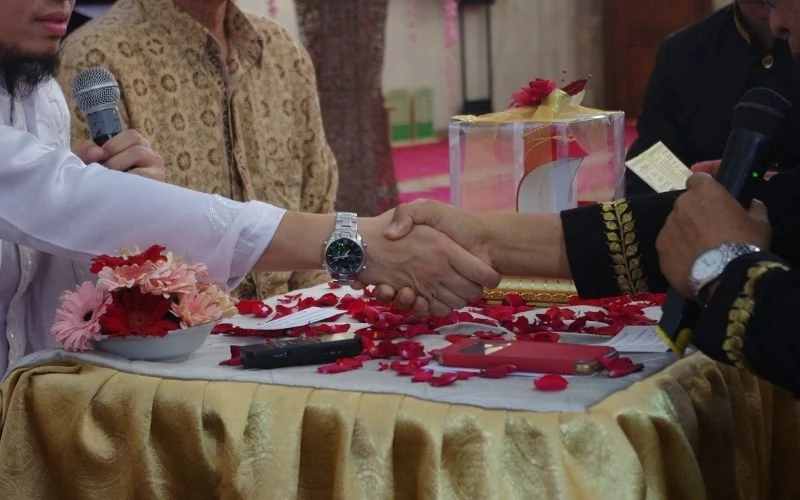
  • If your fiance(e) is Moslem, the ceremony should be held at the Kantor Urusan Agama (“KUA”) or the Office of Religious Affairs.
  • These offices will issue a Marriage Book (“Buku Nikah”), which is evidence that you have legally married.
  • Persons wedded in a Moslem ceremony and issued a Marriage Book need not record their marriage with the Civil Registry.

Documents

The following are marital requirement documents if you having Moslem Ceremony:

  1. Copy of passport;
  2. Copy of Birth Certificate;
  3. Letter of No Impediment, a sworn affidavit witnessed by a Consular Officer at the Embassy or Consulate General stating that the foreign bride/groom is legally free to marry. Your Indonesian fiance(e) must obtain a similar document from the government district office, or Kelurahan.
  4. Copy of Divorce Decree (if applicable).
  5. Passport sized pictures of you and your fiance with red or blue background.
  6. Tax receipt or proof of tax settled (for foreigner who works in Indonesia).
  7. Copy of KITAS (Temporary Residence Permit Card) or your visa, if applicable.
  8. Citizenship letter and Endorsement Letter by Police (for those who live and reside in Indonesia).

All Documents written in foreign languages have to be translated into Indonesian by authorized translator.

Non-Moslem Wedding Marriage/Wedding Ceremony

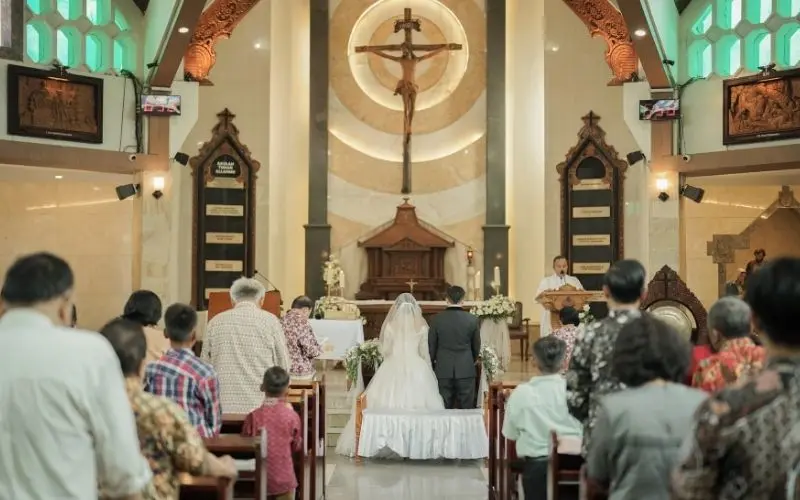
An expatriate/Indonesian couple will experience two type of ceremonies. The religious part will first be performed followed by a civil ceremony. The religious part will conducted by a representative of the couple’s own religious belief (i.e., a Priest for Catholics, a Minister for Protestants, or a Celebrant for Hindu and Buddhist followers).

There will be two certificates presented at the end of ceremony, one from the church/temple/other, and the other from the Civil Registry Office.

General Requirements

  • If both you and your fiance(e) are Christian, Buddhist or Hindu, you must hold the church (or temple) ceremony first, then record the marriage with the Civil Registry.
  • The Civil Registry will in turn issue a Marriage Certificate which is evidence that you are legally married. A non-Moslem wedding which is not recorded by the Civil Registry is not considered legal.
  • There is normally a ten-day waiting period in order to register your marriage with the Civil Registry upon submission of all supporting documents. Recording by Civil Registry officials can sometimes be arranged directly at the religious ceremony for an additional fee.

Required Documents for a Non-Moslem Wedding

The following documents must be completed:

  1. Copy of passport (both partners);
  2. Copy of birth certificate (both partners);
  3. Copy of proof of legal termination of any and all previous marriage i.e. Absolute Divorce Decree (If applicable) or Death Certificate;
  4. Copy of passports of two witnesses;
  5. Six identical 4x6 cm photographs of you together with your spouse (with the groom on the right side);
  6. Letter of No Impediment stating that you are legally free to marry from Embassy in Jakarta;
  7. Indonesian Police Certificate stating that your intend to get married in Indonesia and no-crime committed before.

Our thanks to Asep A. Wijaya of Wijaya&Co for this information www.wijayaco.com

Additional details

In accordance with Law No. 1 of 1974 concerning marriages in Indonesia Article 2 (1):

“a marriage is legitimate if it has been performed according to the laws of the respective religious beliefs of the parties concerned. All couples who marry in Indonesia must declare a religion. Agnosticism and Atheism are not recognized. The Civil Registry Office (Kantor Catatan Sipil) can record marriages of persons of Hindu, Buddhist, Christian-Protestant and Christian-Catholic faiths. Marriage partners must have the same religion, otherwise one partner must make a written declaration of change of religion.”

The Religious Marriage under Islam is performed by the Office of Religious Affairs (Kantor Urusan Agama) in a ceremony at a mosque, the home, a restaurant, or any other place chosen by the couple and is legal immediately after the ceremony. A Christian, Hindu or Buddhist marriage is usually performed first in a church or temple ceremony.

Persons of non-Islamic faith are required to file with the Civil Registry Office in the Regency where they are staying first a Notice of Intention to Marry as well as a Letter of “No Impediment to Marriage” (Surat Keterangan tentang tidak adanya halangan terhadap perkawinan) obtained from their consular representatives.

For the issue of the Letter of No Impediment to Marriage by your Consular Representative you may need to present for yourself and your fiance(e) your:

  • certificate of birth,
  • certificate of your local council stating your nationality, legal address and marital status
  • Passport(s) valid for more than 6 months for foreign citizens, or KTP (Identity card) for Indonesian citizens, and
  • Certified Divorce Decrees (absolute/final) and/or Death Certificates regarding the termination of all previous marriages.
  • Surat kesehatan (letter of good health) issued by the foreign embassy/consulate stating that the expat spouse is in good health and able to marry.

Different countries may have different requirements, so contact the Consular Representative of your country in their Jakarta Embassy for details well before the intended date of marriage.

For the Notice of Intention to Marry you have to submit some or all of the following documents for both partners to the Civil Registry Office. (Show the original and give them a photocopy - all documents should not be older than three months prior to the wedding):

  • Certificate of the religious marriage,
  • Passport for foreign citizens, or KTP (Identity card) for Indonesian citizens,
  • Certified birth certificate, legalized and translated into Bahasa Indonesia,
  • Certified divorce decree (absolute) or death certificates regarding the termination of all previous marriages,
  • Proof that all taxes for the foreigner were paid,
  • Certificate of the structure of your family
  • Certificate of birth for all your legal children
  • Certificate of religion
  • Certificate of your marital status
  • Four 4 x 6 cm photos, both partners side by side,
  • Foreign citizens: 'Letter of No Impediment to Marriage*' issued by your Consular Representative,
  • For Indonesian citizens: never married: a Surat Keterangan Belum Kawin from RT, Kepala Desa or Lurah (district chief); Men aged 18-21 and women aged 16-21:
  • Parental letter of consent, signed across the meterai/tax stamp Rupiah 6,000.

Before the marriage, you and your fiance(e) also may wish to file with the Civil Registry a prenuptial Property Agreement (Surat Pernyataan Harta) which must be signed before a local Notary Public. This contract is necessary if you wish to hold property separately during the marriage. In the absence of such a document, Indonesian marriage law assumes joint ownership of property. Two witnesses over the age of 18 are required. They must show the originals and present photocopies of their passports if they are foreign citizens or KTP (identity cards) if they are Indonesian citizens. Civil Registry employees can act as witnesses.

The Civil Registry office has a Mandatory Waiting Period of 10 working days from the date of filing. This waiting period may be waived for tourists presenting a guest registration form (Form A). Islamic Marriage Certificates (Buku Nikah) issued by the Office of Religious Affairs (Kantor Urusan Agama) are legally valid in Indonesia and do not require registration with any other agency if you are going to live in Indonesia.

However, if you might move somewhere else in the future, get a marriage certificate issued by the Civil Registry and an officially certified translation right away (see below). All other Marriage Certificates will be issued by the Civil Registry usually on the same or next day. A sworn English translation of the marriage certificate should be obtained for use abroad. It may be necessary for the marriage certificate or translation to be registered by your Consular Agency. Or you may choose to have the sworn translation of the marriage certificate verified or a special translation made by the Consular Agency of your home country or the Consular Agency of your country of residence might prove useful.

*Letter of No Impediment to Marriage :

  • Bring the original of the following documents for both yourself and your fiance(e) to the Consular Agency. A certified document bears an original raised press seal or ink stamp from the official custodian of the original document, such as the state Department of Health Services or Family Court, not a notary public seal. A photocopy of a certification seal is not acceptable, although the document may be a photocopy, it must bear an actual raised seal or ink stamp.
  • Passport for foreign citizen and the KTP (ID card) for Indonesian citizen.
  • Certified divorce decrees (absolute/final) or death certificates regarding termination of all previous marriages.
Based upon these documents and an affidavit prepared by the applicant, the Consular Agency will issue a Letter of No Impediment, usually within a few minutes.

Basically the letter needs to say something like:

We have reviewed the legal documents and status of _______  and can find no legal reason that would prevent his/her from marrying again. She/He is legally single and has never married (or) is legally divorced (whichever is appropriate).

Basically the Indonesian authorities need an official letter from the foreign spouse's government that says that he/she is not currently legally married .. therefore he can marry the Indonesian fiance.

Process of legalization of documents

Legalization of all documents is done by the Ministry of Foreign Affairs (Departemen Luar Negeri), Directorate for Consular Affairs - Legalization Section, Jl. Taman Pejambon 6, Jakarta Pusat

Then these documents have to be translated into Bahasa Indonesia by a certificate translator.

The translations have to be validated by the Ministry of Justice (Departemen Kehakiman), Legalization Section, Jl. Rasuna Said 3, Kuningan, Jakarta Selatan and also by the Ministry of Foreign Affairs

When you finish all the paperwork detailed above, take it to your government's embassy in Jakarta where they can validate any necessary documents. In your home country, you can present these wide array of official documents to the local government to get a legal wedding certificate in your home country.

After reading through the extensive bureaucracy involved for foreigners marrying Indonesians ... you can see why a lot of them opt to marry overseas instead!


Getting Married Abroad

A foreign marriage certificate will be recognized by the Indonesian government (for the purposes of Indonesian paperwork) if you take your foreign marriage certificate to the Indonesian consular office and have an Indonesian translation of the foreign marriage certificate "consularized" by the Indonesian consular office for the area which you live. The consularization process means that the verify the validity of the document and stamp the back of the document and sign it and use an official stampl. The Consular office can usually help you to translate your marriage certificate, for a fee. If you're not sure which consulate you should do the paperwork through, contact the Consular office of the Indonesian Embassy in your capital city, tell them which city/state/province you live in and they will tell you which consular office to go to for your paperwork.

In a few cases (usually due to differing religions) the foreign spouse may be asked to convert or the couple must remarry, but in most cases a consularized translation of the marriage certificate is adequate. Especially in cases where the couple already have children and have been married for some time, there are fewer questions about the legality of their marriage.

Indonesian government marriage law of 1974 stipulated that you must register your marriage with the Civil Registry (Kantor Catatan Sipil) within one year after you return to Indonesia (Marriage Law). However in December of 2006, a new bill passed called Undang undang 23 tahun 2006 tentang Administrasi Kependudukan., in which new regulations are now in affect. The prevailing law is now the Law of Administration of the Population (2006) and not the Marriage law (1974):

Indonesian citizens who have married abroad (outside Indonesia) are obligated to register with an appropriate Indonesian government consular office (consulate or embassy) in the country where the marriage took place, in order to report this marriage officially to the Indonesian government.

A report must also be made to the appropriate government authority in your hometown in Indonesia in order to assure that your marriage is legal under Indonesian law. If you are Muslim, you report your overseas marriage to the Kantor Urusan Agama (KUA) in Indonesia, if you are from another religion, you report to the Catatan Sipil in the hometown of the Indonesian spouse. Without reporting in this way, you are not considered married by the Indonesian government! This should be done, at the latest, 30 days after the Indonesian citizen returns to Indonesia. If you are late reporting, the fine coudl be as much as Rp 1 million++.

The civil registry officer will check the date of your marriage and the date of your arrival to Indonesia after you have performed the marriage abroad. If the day you arrive to record your marriage exceeds the limit, then the Civil Registry Office in Jakarta may also require a court decree in order for the marriage to be recorded (Jakarta Municipal Regulation). When you register you will obtain a Tanda Bukti Laporan Perkawinan, which makes your marriage legal in Indonesia.

The Kantor Catatan Sipil may ask you for ... are you ready ... a letter from the foreign spouse's parents saying they give permission for the marriage, even after the fact! Seems strange ... but this request has come up repeatedly. So, if you want to avoid hassles, get a letter from you folks or other senior family member before you start through the bureaucracy at Kantor Catatan Sipil.

They may also ask for a certified letter from the foreign spouse's embassy verifying that the marriage certificate is legal ... which shouldn't be any problem if it is notarized, and especially if you have had the translation consularized by the Indonesian consular officials abroad. If you have children, you can bring them with you to these meetings ... more proof that you're married! Don't despair, often the officials are happy with just seeing a copy of your foreign marriage certificate, consularized by the Indonesian consulate and that is adequate to register you. But as with everything else - there is an exception to every rule!

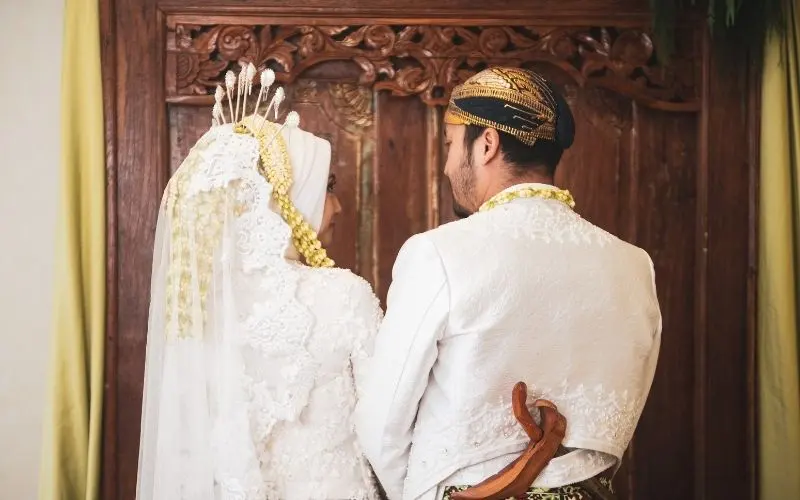
It is customary in Indonesia to throw a big reception to which everyone one of the Indonesian partner's family members, friends and acquaintances is invited. Some couples who have married abroad may opt to have a reception in Indonesia which, in theory, demonstrates the Indonesian spouse's family's support of the marriage. Or, another way to go is to have a "tunangan" (engagement ceremony) in Indonesia in traditional fashion before the wedding,

One visitor to the site wrote about his experience returning to Indonesia after marrying abroad:

We experienced family pressure to make our marriage "syah" after returning from the US in 1997 and registering with the Catatan Sipil. My wife found a sort of kyai in her father's village who performed a ceremony that looked a lot like the standard Muslim ceremony I've seen at KUA two days ago (witness/wali, prayer, etc.) but without the buku nikah. In fact, the kyai and I and anyone in attendance who cared about accuracy knew that I was "declaring respect for Islam" but not converting. This may be enough for some families.

Prevailing law - Undang-Undang nomor 23 tahun 2006 stipulates:

Pasal 37
(1) Perkawinan Warga Negara Indonesia di luar wilayah Negara Kesatuan Republik Indonesia wajib dicatatkan pada instansi yang berwenang di negara setempat dan dilaporkan pada Perwakilan Republik Indonesia.
(2) Apabila negara setempat sebagaimana dimaksud pada ayat (1) tidak menyelenggarakan pencatatan perkawinan bagi Orang Asing, pencatatan dilakukan pada Perwakilan Republik Indonesia setempat.
(3) Perwakilan Republik Indonesia sebagaimana dimaksud pada ayat (2) mencatat peristiwa perkawinan dalam Register Akta Perkawinan dan menerbitkan Kutipan Akta Perkawinan.
(4) Pencatatan perkawinan sebagaimana dimaksud pada ayat (1) dan ayat (2) dilaporkan oleh yang bersangkutan kepada Instansi Pelaksana di tempat tinggalnya paling lambat 30 (tiga puluh) hari sejak yang bersangkutan kernbali ke Indonesia.

Pasal 90
(1) Setiap Penduduk dikenai sanksi administratif berupa denda apabila melampaui batas waktu
pelaporan Peristiwa Penting dalam hal:
a. kelahiran sebagaimana dimaksud dalam Pasal 27 ayat (1) atau Pasal 29 ayat (4) atau Pasal 30
ayat (6) atau Pasal 32 ayat (1) atau Pasal 33 ayat (1):
b. perkawinan sebagaimana dimaksud dalam Pasal 34 ayat (1) atau Pasal 37 ayat (4):
c. pembatalan perkawinan sebagaimana dimaksud dalam Pasal 39 ayat (1);
d. perceraian sebagaimana dimaksud dalam Pasal 40 ayat (1) atau Pasal 41 ayat (4);
e. pernbatalan perceraian sebagaimana dimaksud dalam Pasal 43 ayat (1);
f. kematian sebagaimana dimaksud dalam Pasal 44 ayat (1) atau Pasal 45 ayat (1);
g. pengangkatan anak sebagaimana dimaksud dalam Pasal 47 ayat (2) atau Pasal 48 ayat (4):
h. pengakuan anak sebagaimana dimaksud dalam Pasal 49 ayat (1):
i. pengesahan anak sebagaimana dimaksud dalam Pasal 50 ayat (1);
j. perubahan nama sebagaimana dimaksud dalam Pasal 52 ayat (2);
k. perubahan status kewarganegaraan di Indonesia sebagaimana dimaksud dalam Pasal 53 ayat (1); atau
l. Peristiwa Penting lainnya sebagaimana dimaksud dalam Pasal 56 ayat(2).
(2) Denda administratif sebagaimana dimaksud pada ayat (1) paling banyak Rp.1.000.000,00 (satu juta rupiah).

Inter-faith marriages

Indonesian government regulations make it difficult for people of different faiths to marry. If you want to be married in Indonesia, the official government regulation is that either the bride or groom must convert to the other's religion. This can be done in the Kantor Urusan Agama in the Religious Affairs Ministry. While for some this is a true conversion, for others this is simply a paperwork formality to enable the couple to marry and ease documentation procedures. As with everything else - you may find yourself the exception, with no one asking anything about your faith when you go to get married or register your marriage. In many cases the man is asked (by the girl's family or religious leaders in her community) to get circumcised. In some cases they'll ask for visual proof, in others, they'll take your word for it ... !

In Islam, it is forbidden for a Muslim woman to marry a man who is not Muslim - thus the pressure will build from the Indonesian fiance and her family for the expatriate non-Muslim man to convert. Conversely, a Muslim man may marry someone who is one of the "People of the Book" who share the historic religious roots of Islam - Christian and Jewish women. The understanding though is that the children of these couples must be raised Muslim. In fact, these mixed religious couples will raise their children as they see fit. We've seen examples of strict Muslim upbringing, strict Christian upbringing, no religious participation/attendance, and even indifference to religious upbringing.

Some inter-faith Indonesian couples purposefully get married while they are overseas and return with the marriage a fait accompli ... legal documents and all ... and that is one way out of one of the Indonesian partners having to convert in order to marry.

Mind you we are simply discussing legalities here. Once you move to Indonesia, one may find that the pressures from the Indonesian spouse's family and friends may influence the foreign spouse's previous decision to convert or not to convert to the Indonesian spouse's religion. Indonesian society tends to have more of the "image of religiosity" than western societies. Even if your Indonesian fiance isn't particularly religious, be prepared for his/her family to be so. Generally speaking Indonesians find it very difficult to go against their family's wishes.

There is a support group for foreign women married to Indonesian men who are considering converting to Islam, called Sisters.

For more information, see two articles on Inter-Religious Marriage in Indonesia and Conversion to Islam: for expatriate men marrying Indonesian Muslim women.

Registration of Indonesians Spouses Living Overseas

Be advised that all Indonesians living overseas must register their presence with the nearest Indonesian consular office. The penalty if you do not do this within two years of your arrival is certain complications in renewal of passports, and could even entail loss of Indonesian citizenship.

For more information on Indonesian citizenship issues.

Expatriate Men Married to Indonesian Women

Visa regulations for foreign husbands of Indonesian women

Kitas:

In the past, foreign husbands of Indonesians were treated just like other foreign men in regards to obtaining a KITAS (limited stay permit). That is, they had to have a sponsor and a work permit before the KITAS can be issued. There was no special dispensation for foreign men married to Indonesian women to automatically entitle them to limited stay status. The wife was able to sponsor her children's KITAS - but not her husband's.

Now, with the passing of the Undang Undang 12 tahun 2006 tentang Kewarganegaraan, an Indonesian wife CAN sponsor a foreign husband for semi-permanent residency (KITAS - one year stay).

One of the most basic questions we receive is “Will marriage in Indonesian woman give me permanent residence there?” Since the advent of the new marriage law, the answer is "Semi-permanent is possible ... for legally married couples ... those married in Indonesia who are registered at the Kantor Urusan Agama or Catatan Sipil office won't have problems. Those married abroad have to make sure that their foreign marriage has been registered on the consular office at the KBRI, KJRI or KRI, or the Catatan Sipil office in Indonesia and that they have a Surat Tanda Bukti Perkawinan.

If one day your husband intends to work, he will then have to get a new KITAS sponsored by the company who plans to employ him.

Sponsorship of Visas for Expat Men by their Indonesian Wives

Since the publication of the new citizenship law a foreigner can be sponsored for residency by his Indonesian wife. However the various regulations related to it seem not very well known by the Imigrasi around the country. In February 2007 ministerial decision no M.01-IZ.01.10 formally included foreign husbands joining their Indonesian wives as being eligible for a KITAS.

Though one could pick up a VITAS (sponsor istri) from a KBRI abroad, having previously obtained the agreement of the DitJen Imigrasi in Jakarta, we believe that the procedure described below is somewhat easier. It allows you plenty of time (you first enter on a SosBud, which can be extended up to 6 months) to convert it to an ITAS. Having almost 6 months to do so, it leaves almost no chance to the Imigrasi to try to extort bribes from you. It also offers the advantage of not having to exit Indonesia to get it.

Here is the procedure

  1. The foreign husband gets a Visa Kunjungan SosBud abroad and gets an Izin Kunjungan delivered for a first leg of 60 days at the port of entrance.
  2. The foreign husband goes to his local KanIm (no mandatory waiting period of 4 months), along with his Indonesian wife to apply for the conversion of his izin kunjungan to an ITAS. (Pasal 47 & Pasal 48* PP nomor 32 thn 1994)
  3. The sponsor “buys” the needed forms (IDR 10K to IDR 25K) and fills out a written demand. A “Riwayat Hidup” of the foreigner, and a bank statement showing that the couple has enough funds to live for one full year in Indonesia should be attached.
  4. In addition to the above, the sponsor should submit:
    - Akte Perwakinan asli (kristen, Hindhu, Buddhist) or Buku Nikah asli (islam) or Surat Tanda Bukti Lapor Perkawinan asli (overseas wed)
    - Wife's KTP
    - Husband's Passport
  5. Usually, 2 extra sets of photocopies are requested for each set of documents.
  6. Imigrasi will then issue a document to be brought to the Kantor Wilayah. It is a letter which says that after reviewing all the documents, he has no opposition for the conversion of the immigration status. Allow a couple of days to get the letter signed by the KaKanIm.
  7. After reviewing all your documents, the Kepala Bidang Keimigrasian of the Kantor Wilayah will issue a letter stating his positive opinion about the change of status of the foreign husband. This letter, along with a set of all the documents, should be brought or sent to Bpk Direktur Izin Tinggal dan Status kemigrasian in the DitJen Imigrasi situated in Jln Rasuna Said Kav 8-9 in Jakarta. Allow 1 day for the KanWil to sort out the document. There is no fee for the letter, but anything like IDR 10K to IDR 50K should help the lady to type faster. If you live far from Jakarta, you can send the documents by Tiki from the KanWil to the DitJen. That seems to work well.
  8. Upon reception of the letter of the KanWil, after reviewing all the documents the Kasubdit Alih Status Keimigrasian (Bapak Soepriatna Anwar, SH, MH), on behalf of the Direktur Izin Tinggal dan Status kemigrasian (Bpk Agastya Hari Marsono, Bc.Im.) should issue a Keputusan Direktur Jenderal Imigrasi nomor: (the number/reference of the Keputusan) tentang Alih status Izin Kunjungan menjadi Izin tinggal terbatas atas nama: (Name of the foreigner) stating that a new status can be granted to the foreigner. Allow a week to 10 days for this keputusan to be ready from the time you delivered all the documents to the DitJen. Monitor it on the phone at (021) 5224658 ext 2521. Don't hesitate to phone 15 times a day, you need luck to have someone answer the phone!
  9. You, or any relative (holding a “Surat Kuasa Khusus” from you), should pick up the Keputusan DitJen directly from the Sub-Direktorat Alih Status Keimigrasian. Chances are that you will meet with Pak “R.S”. He is not a bad chap.
  10. In fact, the DitJen will issue 3 copies (1 for you, 1 for the KanIm, 1 for the KanWil). You need to bring it back victoriously to the KanWil which will give you a letter authorising the KanIm to start to process a KITAS.
  11. At that point, the foreign husband will have to submit a few pics and get fingerprinted (fee: IDR 15K).
  12. Then comes the time to pay the fee for the KITAS: IDR 700K for a 1 year KITAS, if your passport has a minimum of 18 months remaining validity, or IDR 350K for a 6 months KITAS, if your passport has 12 months remaining validity.
  13. If your KanIm is online with the DitJen, a small problem may occur. After delivering the Keputusan DirJen, Jakarta often “forgets” to finalise the procedure and to enter the “OK” in the system... which means that your KanIm can not process your payment! First time in your life that Imigrasi will refuse your money... enjoy the moment, it generally doesn't happen often! If it happens, no worries, just telephone to the number given at point 8 (or fax : 021- 52962095... this one is the fax of the SubDit Alih status)
  14. The Kantor Imigrasi will then stamp an ITAS in the foreign passport and a KITAS (Kartu Izin Tinggal terbatas) will be issued.
  15. 2 to 3 days after that, a POA Book will be remitted (no fees for it).
  16. At that point, it is advisable to ask for an “Izin Masuk Kembali” to be stamped in the husband's passport. Without it, the KITAS holder “loses” his KITAS if he goes out of Indonesia. Better then to have it, if you don't want to do this process all over again. Do a search in the archives of the Expat Forum for the official fees attached to the Izin Masuk Kembali.
  17. You still need to process a SKLD (Surat Keterengan Lapor Diri) which is a trendy little plastic card with the husband's pic. There is no fee for it but the Intelkam boss will try to extort something from you. IDR 50K should do it. You have to go to your main Police Resort office to get it sorted. You will also have to get a STM (Surat Tanda Melapor - no fee) stating your address. The person who gives shelter to the foreigner should be the one reporting and signing it.
  18. The foreigner has to go to his Kantor Lurah to get a Surat Keterengan Domisili stating his formal address in Indonesia and he should bring this letter to his Catatan Sipil to get a SKTT (Surat Keterangan Tempat Tinggal), a SKPPS (Surat Keterengan Pendaftaran Penduduk Sementara) and a SKDLN (Surat Keterengan Datang dari Luar Negeri). A foreigner staying on a KITAS MUST register at the Catatan Sipil for the above documents. It will help smooth our KITAP procedures later if you've done this required step. In fact, chances are that the CaPil compil the three documents and issue a nice greenish card attesting your residency and registration as a temporary resident for the length of the KITAS. Fees for it are defined by Peraturan Daerah and vary depending on each kota/kabupaten. It shouldn't cost more than IDR 150K.

    Be careful to note that you have ONLY 14 days to register after the date of issuance of the KITAS (Pasal 20, undang undang 23 tahun 2006 tentang Administrasi Kependudukan). Failure to do so in time would expose you to a fine of a maximum of IDR 2.000K (Pasal 89, undang undang 23 tahun 2006 tentang Administrasi Kependudukan).
  19. Your next move will be to go to the Departemen Pajak to get a NPWP, the husband's personal tax number.

    * amended article in 2005. It reduces to nil the “waiting period” of 4 months previously mandatory before initiating the procedure.

Please Note the following:

  • A KITAS, as described above, sponsored by an Indonesian wife, does NOT allow any kind of work by the expat husband.
  • You will have to renew the KITAS (without the SosBud Part) at least 1 month before its termination. Annual renewal also apply for SKLD, SKTT, STM and SKPPS.
  • Any change in your residency or civil status must be reported to the Kantor Imigrasi, the Police and the Catatan Sipil during the validity of your KITAS.
  • Only legally married (ie. recognised by Indonesian law) wife/husband are authorised to follow the above described procedure.
  • If one day the KITAS holder decides to terminate voluntarily his KITAS and to exit Indonesia (eg. relocation in a foreign country), he needs to first apply for an Exit Permit Only at the Kantor Imigrasi of his residence and report to the Catatan Sipil. He also needs to give back his SKLD to the relevant section of the POLDA/MABES POLRI. Failure to do so would put him in trouble if one day he decides to come back to Indonesia.
  • Providing that all the requested documents are submitted by the sponsor in the correct timing, providing that you don't use the services of a friend/calo and that you submit yourself all the documents in the relevant administration (KanIm, KanWil, DitJen) you should not have trouble.
  • Please, don't let corrupted Pejabat abuse you. Don't pay anything more than the legal fees. You will regret it bitterly and enter in a spirale that you can in no way control. If you start to pay bribes, you may void your right to complain if the things turn out wrong.
  • The total procedure should last around 1 to 2 months roughly. Note that you have 30 days “only” to get the KITAS issued after the issuance of the Keputusan DirJen.
  • Don't forget to extend your izin kunjungan, if needed, during the procedure!

Our thanks to Atlantis for researching and sharing this section's information! For additional details see this thread on the Expat Forum.

Multiple Entry Social Cultural (Sosbud) Visa: 12 Months Validity:

With the new Citizenship Law, effective 26 June 2006, the foreign husband can also opt to get a multiple entry social-cultural (sosbud) visa which valid for 12 months under the Indonesian wife's sponsorship. The telex approval will be send to your wife and you can bring the copy to the nominated Indonesian embassy abroad to pick-up the visa.

She can also be the sponsor for a social visa which allows her foreign husband to stay for a maximum of 1-2 months at a time (with renewals up to 12 months). This visa, however, does NOT allow you to work.

Supporting Documents

Prior to obtaining the telex approval for your 12 Months Sosbud Visa, you must first submit the following supporting documents at the Indonesian embassy::

1. Photograph size 4 x 6 cm with red background;
2. Copy of your passport;
3. Copy of your marriage certificate/marriage book;
4. Copy of your Indonesian wife's ID Card;
5. Copy of your Indonesian wife's Family Card (Kartu Keluarga);
6. Sponsorship Letter signed by your wife;
7. Copy of your bank statements;
8. Fill-in Form Model 13 VIS K.

At the Indonesian embassy abroad, you will be requested to fill-in Visa Application Form for Visit - Single/Several Journey(s). Choose "Several" instead of ''Single''. At the ''Purpose of Visit to Indonesia'' Section, please do not conflicting between choice number "10-Social'' and number ''15-Family Visit''.

The number 15 is for family member when you have a family in Indonesia and you visit them in Indonesia with their sponsorship. The number 10 is for non-family members, such as, if you have an Indonesian girlfriend, and you want to visit her in Indonesia under her sponsorship.

Short-term visas

Foreign husbands of Indonesians can enter Indonesia on a tourist or social/visit visa initially, then try to find a sponsoring organization (job) after their arrival. The social/visit visa is preferable to a tourist visa since the tourist visa can not be extended past 60 days; you have to leave Indonesia and re-enter the country on a new 60-day tourist visa.

You must obtain the Social Visit Visa from an Indonesian embassy overseas before entering Indonesia. Your wife can sponsor a Social Visit Visa, which is initially good for two months and allows four one-month extensions at about Rp 250,000 each (9/2008) in Indonesia without having to leave the country. If the Indonesian wife sponsors the social/visit visa and then the foreign spouse finds employment, he will need to leave Indonesia and go to Singapore, for example, to have the new visa (that his new employers obtains) stamped in his passport and reenter under the new sponsorship.

One person's advice: If the foreign husband does not work, he could transfer money from abroad to an Indonesian bank and save the receipt from the bank, in order to prove that he leaves with his own money. No Indonesian law forbids a foreigner to stay on a sosial budaya visa year long without working. The foreign husband will just have to exit Indonesia every six months (i.e. 60 days for the first leg of the sosbud visa + 4 extensions of 30 days each) and re-enter with a new visa. Immigration officer will may be try to refuse to extend the stay of the husband beyond his fourth month of stay, arguing that they don't know how you are living. But you can overcome this problem by then asking politely to the kantor wilayah of your town of residence and showing all the receipts of the money transferred from abroad. Advice from a expat husband who has lived in Indonesia and stayed on a sosbud visa for 5 years.

Sample Letter to request a Kunjungan SOSBUD Visa
Sample Letter to ask for an extension to a SOSBUD Visa
Sample Surat Permintaan dan Jaminan

Opening a Company

Some foreign men married to Indonesians choose another route - by starting a business which is owned by the wife, her family or friends. The business can then apply for a work permit for the foreign husband as an expert. Of course this depends on your area of expertise. For example, if you are an expert diver, your wife can open a dive shop and hire you to teach diving. If you are a chef, your wife can open a restaurant, etc.

In some fields, such as management consulting, a foreigner can open a 100%- foreign owned company. These regulations change often, so check with a consultant or lawyer to determine whether or not these might be viable options for your situation.

Change of citizenship for spouse

With the advent of the new nationality laws, the foreign spouse can apply for citizenship after a 5-year period of continuous residence in Indonesia on a semi permanent resident visa with the same sponsor. If the KITAS has been discontinued, or sponsorship changed mid-stream, you need to prove 10 years of stay in Indonesia to be eligible.The obvious advantage of an Indonesian passport is that it eliminates the need for a work permit. For more information on Indonesian citizenship issues and Indonesian Nationality Act.

After the five years you will be eligible to formulate a "demand" to become Indonesian citizen. Bear in mind that this is just a demand, not an automatic right and there are a few conditions (Pasal 9 undang undang 12 tahun 2006) such as:

  • being fluent in, or at least have good command of, Bahasa Indonesia
  • not have spent more than 1 year in jail
  • not be insane
  • be over 18 years old
  • pay the fee (this is a percentage of your declared income)
  • not hold a second citizenship. The foreign spouse will have to revoke his/her foreign citizenship.
  • have a proper job and income.

These conditions are the same preliminary conditions for persons who would apply to become an Indonesian citizen without being married to a national. However, more conditions apply for this particular case (foreign spouse of Indonesian), so we would advise you to seek the help of a specialised attorney.

If the Indonesian government refuses your citizenship request, you are, however, entitled to have a KITAP which is a Permanent resident permit which allows you to stay for five years straight on one visa and offers a few other privileges, but you still don't have the right to work on a KITAP visa.

Obtaining Dual Nationality for Indonesian/Foreign Children

In the past, by Indonesian law, the nationality of children follows the nationality of the father. All children of foreign men were considered foreigners (WNA - warga negara asing). It made no difference where the children were born as to whether or not they have the right to Indonesian citizenship.

With the advent of the new citizenship law (Law No. 12 of 2006) things have change dramatically! The newly-enacted citizenship law gives children of transnational marriages with Indonesian mothers the right to hold dual citizenship until they are 18 years old. At 18, they must choose whether to stay Indonesian citizens or follow their foreign fathers' citizenship. They will be then given three more years to decide on which nationality to choose. If they are married before the age of 18, their dual citizenship will be revoked.

Any children born after 1 August 2006 are automatically entitled to the indonesian citizenship as per law 12/2006 (undang-undang nomor 12 tahun 2006 tentang kewarganegaraan), meaning that no procedure is required. Just go to the Kantor Imigrasi and get your children a passport, showing their birth certificate (and a few other documents - they will give you the list).

Your children will be entitled by Indonesian Law (check with your own country's laws for the foreign citizenship rules) to have dual citizenship until the children reach the age of 18. The chilren then have three years to choose one of the two citizenship as their citizenship, meaning that the children will “release” one of them.

You may decide not to deal with the Indonesian citizenship (though I would not advice to do it, unless if it is to allow you time to process the child's foreign citizenship) and process a KITAS (temporary residency permit for foreigners). By birth, your children are automatically entitled to the Indonesian passport, if you decide to get it. No immigration officer can say otherwise, since this is an automatic right.

Don't let any corrupt officials ask you for mor emoney than that. Your child has rights and there is no way that the government officials can refuse to process their citizenship. A firm warning that you are ready to complain if anyone gives you difficulties should be enough.

How to proceed:

BE AWARE that you have untill August 2010 to apply for the dual citizenship. After this date, your kids rights will be void if they are born before August 1st 2006

Outside Indonesia, contact the KBRI/KJRI of your home country. They will guide you through the process.

July 2009 - Affidavit and Paspor RI for kids born from mixed couples

Dealing with the citizenship of kids born from mixed couples has been for long an headache for the parents, especially when the father was a foreigner. Since 2006, a new citizenship code has been enacted, allowing these kids to have a temporary double citizenship, until they reach the age of 21. (From eighteen years old, they are given up to three years to choose to keep one and only one of the two citizenships).

However, the situation at their birth is still unclear for many with different rumors circulating. There are indeed two different procedures/casees, depending on if the child is born before or after the implementation of the 2006 law.

Case 1: For Children Born Before August 1st, 2006

Children born before August, 1st 2006 are not automatically entitled to Indonesian citizenship. Their Indonesian citizenship is granted after an assessment and a procedure lasting 4 to 6 months which ends with the deliverance of a Surat Keputusan signed by the Minister of Justice and Human Rights. The procedure is initiated at the Kantor Wilayah (if the residence is in Indonesia) or at the KBRI (if the residence is outside of Indonesia). A few forms need to be filled out along with legalized copies of documents such as Akta Perkawinan of the parents, Akta Kelahiran of the kid, Kartu Keluarga…etc. The procedure has a cost (IDR 500.000) and quite a few KanWil around the country have been known to be abusive about extra charges. But one can still get the procedure done by the book.

Beware, if your child was born before August 1st, 2006 you only have until August 1st 2010 to register and initiate the procedure. The 2006 Indonesian citizenship act gives only four years for children falling under this category to claim their right to Indonesian citizenship.

Case 2: For Children Born After August 1st, 2006

For them the situation is less complicated. Being born after that the law took affect, these children are automatically entitled to Indonesian citizenship. Automatically doesn’t mean that one has nothing to do, there are still some procedures. The first step is to have an akta kelahiran (birth certificate) established for the child. Then, one should go to Imigrasi (no hurry, there is no fine nor time limit) to initiate the following procedure:

1. Ask for and complete the form named “permohonan pendaftaran untuk mendapatkan fasilitas keimigrasian“
2. Prepare a copy and the original of the akta kelahiran of the kid
3. Prepare a copy and the original of the akta perkawinan (or akta perceraian if it is the case) of the parents
4. Prepare a copy and the original of the foreign passport (if he/she has one) of the kid
5. Prepare 4 pics with a red background size 4cmx6cm
6. Submit all of the above to your petugas Imigrasi di tempat. Don’t expect a smile or a receipt in return.

After a couple of days an affidavit will be delivered by the KanIm. Up through May 2009, this affidavit was free, but as often happens, good things have an end. In May 2009, the government decided that our children, though automatically Indonesian had to have their first experience with Pajak. Fortunately, since they are still young, the Indonesian government officially only requests IDR 75.000 from them to have this affidavit issued.

An affidavit, stapled onto a foreign passport is enough to authorize our kids to stay in Indonesia without requesting a permit and/or to exit the territory of Indonesia. No need to have an Indonesia passport. However, we strongly advise to apply for a paspor RI for your children, especially if you plan to travel outside of Indonesia and if you want him/her to be aware of his/her double citizenship through the official documents.

To make a Paspor RI for your child born from a mixed marriage is a simple thing… as it can be done in Indonesia.

1. Go to KanIm and ask for a Perdim 11 form and fill it out
2. Both parents (though the signature of the foreign father is not really mandatory) fill out the form and sign on top of a meterai with a surat pernyataan giving authority for the issuance of a Paspor RI
3. Prepare a copy and the original of the Akta Perkawinan of the parents
4. Prepare a copy and the original of the Kartu Keluarga
5. Prepare a copy and the original of the Akta Kelahiran of the child
6. Prepare a copy and the original of the Affidavit of the child
7. Prepare a copy and the original of the KTP of the mother
8. Prepare a copy and the original of the passport and/or KITAS (if have) of the foreign father
9. Submit all of these documents to the loket

After an amount of time that can vary from a few hours (inflated fee) to a few days (legal fee – they usually tell you to come back in 3 or 5 days), your child will have his/her photo taken, along with his/her fingerprints (taking the fingerprint of a 6 month old is good fun) and you will be asked a few questions in an interview (wawancara).

It is wise to have all the originals with you at the interview and a few extra pics of the child. Then comes the time for payment: IDR 200.000 for a paspor blanko 48 halaman (48 pages passport)+ IDR 55.000 for the payment of the biometric pics + IDR 15.000 for the fingerprinting. If you pay this and only this, your child ’s passport will be ready in four more days, not more.

Relavant Documents: Undang-Undang 12 Tentang Kearganegaran and Tata Cara Pendaftaran Untuk memperoleh Kewarganegaraan RI

Visa Information for Foreign Children

Some ways to handle visas if you decide not to proceed with dual nationality: A KITAP (5 year resident visa) can be obtained for the children of a foreign father/Indonesian mother, IF ... the child has already had 5 successive years as a KITAS holder. This KITAP status can be applied for with the Indonesian mother's sponsorship.

An Indonesian mother can sponsor a KITAS for her foreign nationality children. The visa will say "Turut Ibu Kandung" (following birth mother). You must submit a letter of financial support with the KITAS application, stating how much the foreign father is willing to give the mother and child monthly for support.

Procedures for Registering the Birth of a Child

Children born out of wedlock

If an unmarried Indonesian woman has a baby with an expatriate man and wants the baby to be an Indonesian citizen, this is now possible with the advent of undang undang 12 tahun 2006, Pasal 4 huruf g, which states: "anak yang lahir di luar perkawinan yang sah dari seorang ibu Warga Negara Indonesia". In other words, a child out of wedlock born from an Indonesian mother is granted Indonesian citizenship by the government.

Visa implications for children

Children born to Indonesian fathers or mothers do not need visas to enter or reside in Indonesia, if they hold Indonesian citizenship as per undang undang 12 tahun 2006.

Be certain to discuss the legal status of your child very thoroughly with the consular officials in your home country or your embassy in Jakarta before making decisions on dual citizenship and visas ... to determine if there will be any complications with prevailing laws in the home country of the foreign spouse.

Education concerns for children

Most international schools are now open to Indonesian and foreign nationals. Though the costs are high, the education is highly superior to the Indonesian school system. Foreign children can also attend Indonesian schools, if their parents so choose.

Home ownership

Since foreigners aren't allowed to own homes in Indonesia, if the couple plans to buy a house, it will have to be solely in the name of the wife, and/or her family members. It may be impossible to borrow money from a bank to purchase a home as the bank will recognize that ownership of the husband. s half of the home will revert to the Indonesian government in the case of a default on the loan.

There have been newspaper articles detailing announcements made by the government that foreigners may now purchase apartments. In fact, to this day, there are no regulations which clearly allow foreign ownership of apartments, though rumors abound that these regulations are forthcoming. Currently, the only way a purchase of an apartment can be arranged is if you have a contract with the developer saying that title for the apartment stays in the developer's name until such time as the laws are changed so that the ownership of the apartment can be in the foreigner's name. Needless to say, seriously consider whether or not you can trust the developer to honor the contract.

Expatriate Women Married to Indonesian Men

Visa status for foreign wives

If the wife is the foreign spouse, the legal situation is totally different. Her Indonesian husband can easily apply for a KITAS for her with the status 'ikut suami' , accompanying the husband. The assumption of the Indonesian government seems to be that these foreign women are housewives, at home raising the children and not in the job market. The foreign wife is allowed to reside in Indonesia under this status, but not allowed to work. The basis for this sponsorship is the marriage certificate. Besides that, you need a letter of sponsorship from your husband, your passport, your husband's ID card and his family card (kartu keluarga).

If you were married overseas, as most foreign wives of Indonesians are, you must take a registered copy of your marriage certificate to the consular section of the nearest Indonesian consulate or embassy. Ask the consular staff to consularize a translation of the marriage certificate and a copy of the foreign marriage certificate.

It is important to have a marriage conducted abroad registered in Indonesia at the Kantor Catatan Sipil within one year of the marriage or as soon as possible after the couple moves to Indonesia. Otherwise the marriage is not considered legal.

If a foreign wife of an Indonesian is on an ikut suami status and wants to leave Indonesia, she must have a letter stating that her husband has given his permission for her to depart. This letter is needed in order to apply for an exit/reentry permit at the immigration office. This regulation is a formality, but can cause difficulties in the case of a separation, divorce or an attempt to spirit children out of the country.

Employment for foreign wives

A foreign wife of an Indonesian may not work in the formal sector unless she has a work permit, just like all other foreigners. This requires special qualifications and can be complicated unless the wife has skills companies here are desperate for and willing to go through the hassle of all the paperwork which is expensive and time consuming.

Applying for a KITAP - Do it Yourself!

Before going to immigration:

  • Prepare a sponsorship letter from your husband.
  • Prepare two photocopies of your husband’s KTP.
  • Prepare two photocopies of all your documents.
  • Have photos ready. Two each of 2x3, 3x4, 4x6 – just in case.

There are two forms to fill in from the Immigration office – both of which can obtained at immigration for a fee, which includes the
folder (pink) to put it in.

Step 1 – Warung Buncit Immigration office (we use this office as an example)

Take filled in forms to the 2nd floor of Warung Buncit Immigration office (if you are in Jakarta Selatan) and hand in at the appropriate window. They will tell you to come back in one, two or three days to pick up a letter.

Step 2 – Warung Buncit Immigration office

Pick up the letter you were told to come back for and take it to the Immigration Office in Cawang (get the address from Warung Buncit). The office in Cawang will tell you to buy a folder (different color) to put everything in and then tell you to come back in one, two or three days to pick up a letter.

Step 3 – Cawang Immigration office

Pick up the letter you were told to come back for and take it to the 5th floor, Department Hukuman, Jl. Rasuna Said, Kuningan. They will tell you to come back in one, two or three days to pick up a letter to take back to the Cawang office. Get a phone number because this office is always late with its letter for you and it’s just such a hassle to turn up and not be able to get it.

Step 4 – Department Hukuman

After having rung up and checked the letter is actually ready go, go back here and pick it up. Take this letter back to the Cawang office. They will tell you to come back in one, two or three days to pick up another letter.

Step 5 – Cawang Immigration office

Pick up the letter you were told to come back for and take it back to the Warung Buncit Immigration office. They will tell you to pay the fee – Rp 2 million for a new KITAP and Rp 1 million for a renewal of the KITAP. They will then tell you when to come back to pick up your KiTap. You will also be told to photocopy certain documents. You will also have to take your Blue Book downstairs so it too can be filled by the appropriate person – no cost. They will then tell to come back in a week, possibly less to pick up your new KiTap.

Step 6 – Warung Buncit Immigration office

When you have picked up your new KiTap. visa (which will be in your passport and your blue book) you can go to the Exit/Reentry window on the second floor to do a one-year exit/reentry visa (you will also need a sponsorship letter from your husband for this). This costs Rp 450,000. They will tell you to come back in one, two or three days to pick up your passport and blue book.

Step 7 – Warung Buncit Immigration office

Pick up your passport and blue book and go to Police Headquarters on Jl. Sudirman and go to the office where all foreigners have to report. Hand over your police book and a photocopy of your passport and blue book. It costs Rp 50,000 and usually takes 3 or 4 days.

***Also at Warung Buncit They will also tell you that now you are entitled to a KTP Orang Asing – this is what all Indonesia citizens must carry around as proof of identity and used in legal documents, etc. You will be directed to the Suku Dinas office in Slipi (ask for the address). This office will give you a letter to take to the Suku Dinas office just off Jl. Radio Dalam (remember at
each office you will asked to come back in one, two or three days to pick up the next letter in the process). The Radio Dalam office will give you a letter to take to your kelurahan (local registry office?) who will then claim that no such document exists. Get a contact name at the Radio Dalam office so that when you are sitting in the kelurahan you can instantly call the Radio Dalam office and let them explain the KTP Orang Asing procedure. The kelurahan person will then suddenly remember the form in the filing cabinet and get you to fill it in. Just follow the instructions of the kelurahan person and by one or two weeks you will have your KTP Orang Asing. It’s supposed to be free but you will be asked to pay, at your discretion, a nominal “administration” fee. There should be no cost involved if you do it yourself. If they begin to hassle you, just take your husband and let him handle it. It’s not worth the effort to lose control at this office.

This KTP Orang Asing also allows us to get a five-year driver’s license.

Thanks to Ala of C-4 for this information on applying for a Kitap.

Change of citizenship for foreign wife

Foreign wives of Indonesian husbands may become Indonesian citizens after one year of marriage. If they choose to do so, they must give up their previous citizenship. If they do not choose to change their citizenship after the one-year period, the normal regulations regarding obtaining Indonesian nationality by way of naturalization would apply (5 years residence, etc.).

Expat wives of Indonesian men may consider changing their nationality for a variety of reasons including: to avoid ownership problems with their jointly owned property, to avoid inheritance problems upon the death of their spouse, to enable them to work without a work permit, to build their own business without the hassles of work permits and visas each year, or to help their husband's career. Often, it is a combination of various factors, along with the fact that their children are Indonesian citizens and decreasing ties in their home country due to a long residence in Indonesia.

“An alien wife of an Indonesian national is entitled to Indonesian citizenship if she so wishes and makes a statement to that effect within a year of the marriage. This does not apply if the husband has abandoned his Indonesian nationality.” Source Deplu (http://www.deplu.go.id/)

Some foreign wives who have changed their citizenship to Indonesian may be able to arrange it so that they keep their foreign passports, yet be advised that according to Indonesian regulations this is illegal. Some countries allow you to give up your citizenship once in your life and still get it back again in the future, so check with your embassy to see what rules would apply and what the legal implications of giving up your citizenship would be.

Consider carefully the choice to change your citizenship. You may want to preserve your children's rights to foreign citizenship for the day they want to go to your home country for university education. Foreign student tuition isn't cheap! For more information see 2006 Indonesian Nationality Act.

Nationality of children

As stated above, the Indonesian government regulations now allows dual citizenship of children born to an Indonesian man or woman and a foreign spouse.

If your child is born overseas, you must first obtain a birth certificate from the country of birth. Take this to the consular office at the Indonesian consulate or embassy and apply for an Indonesian birth certificate. The consulate will make an Indonesian translation of the foreign birth certificate and consularize the translation. This translation becomes the child's legal birth certificate for paperwork matters in Indonesia. Be sure that a copy of the foreign birth certificate is consularized by the Indonesian consular office as well. Once the birth certificate is in hand, you can choose to apply for the Indonesian citizenship.

Be certain to discuss the legal status of your child very thoroughly with the consular officials in your home country or your embassy in Jakarta before making decisions on dual citizenship and visas ... to determine if there will be any complications with prevailing laws in the home country of the foreign spouse.

Visa implications for children

Children born to Indonesian fathers or mothers do not need visas to enter or reside in Indonesia, if they hold Indonesian citizenship as per undang undang 12 tahun 2006.

In some cases, foreign mother's of these Indonesian children have been asked to provide proof of their husband's permission to take the children out of the country, if he is not traveling with them. This problem seems to arise when the last name of the foreign mother and the Indonesian children are different. If you are worried about being asked, be sure to carry a letter from your husband and show it to the immigration officials whiny depart Indonesia.

Education Concerns for Children

Because the children of these marriages follow the father's citizenship, they are Indonesian citizens, and therefore in the past have not been allowed to attend international schools in Indonesia (this was a government regulation, not the school's). The only exception to this rule was when the mother had a work permit or the parents were divorced. In these instances, the children could attend an international school, through the mother's sponsorship. If the mother's status is ikut suami and she is sponsored by her husband, the children must attend Indonesian schools or be home schooled. There are no restrictions for children of foreign nationality to attend Indonesian schools, when both parents are foreigners.

Since the above was written, the regulations have loosened a bit ... and now the “Indonesian children” of expat women and Indonesian men have been able to attend some international schools (not all). Following is the story of one successful attempt:

The person I contacted at the Pendidikan dan Kebudayaan ministry said that I needed a letter from my embassy, requesting that my child be admitted to an international school. The person I knew at the embassy then called P&K and clarified matters, so in the end I did not need that letter after all.”

I wrote a letter to P&K detailing our choice of school, included my daughter's date of birth and passport details, and husband's KTP particulars. I had to sign the letter on a Rp. 6,000 meterai (tax stamp).

The man I spoke with at P&K, Pak Yunus, promised the embassy contact 3 working days and the letter permission for attending an international school would be ready. I did not have to pay for the letter, and Pak Yunus was courteous, and even sought my advice on the education system differences in Indonesia and Singapore.”

The address to contact is:
Dir-Gen Pedidikan Dasar Dan Menegah
Jalan Jend. Sudirman
Gedung E Lantai 5
UP Bagian Tata Laksana
Tel. 572-5610
Pak Yunus 572-5612

Kartu Keluarga (KK)

As the children of Indonesian men married to foreign women are, in most cases, Indonesian citizens, all the children and the foreign wife need to be listed on the husband's Kartu Keluarga (family card). The Indonesian husband is considered to be the Kepala Keluarga. If your husband is still on his parent's Kartu Keluarga, you need to arrange for a separate Kartu Keluarga for your family unit after your marriage. The document is obtained through your local RT/RW/Lurah and is the basic document on which all other documents are based - KTP, passport, etc. Be sure to have your children added to your husband's Kartu Keluarga after birth.

Historically, foreign wives of Indonesian men were listed on the husband's Kartu Keluarga ... but their documentation (visa number) appeared under the heading Kewarganegaraan. It has two columns W.N.R.I./Keturunan and Orang Asing.

UPDATE (3/2010) - new document SKSKP (Certificate Listing Family Members) is issued by Catatan Sipil for foreign wives on a KITAS (not yet a KITAP). by some offices, in place of putting the foreign wife on the husband's Kartu Keluarga. There seems to be some confusion on the proper paperwork with various offices.

A foreigner with an temporary stay permit would get a foreigner or visitors identity card (KIP) and a certificate listing family members (SKSKP). And a foreigner with a permanent stay permit will receive an identity card for foreigners (KTP WNA) and card listing family members (KK).

Persist in getting the appropriate document as this is an important document for your family and your inclusion can have an influence on whether or not you get a KITAP after five years of residence on a KITAS.

Legally, only Indonesians and foreigners (in this case the foreign wife) on a KITAP (permanent resident) can be listed on the same KK as the Indonesian husband. This is the regulation.

Many Catatan Sipil don't enforce it as long as the head of the family is not a foreigner. Many times a foreign wife and/or foreign children have been listed with no problem, though they should not actually be. Civil servants just don't know the law. However if a foreigner has a KITAP (5 year permanent residncy) he/she can be listed on a KK. No real solution for KK inclusion is offered to foeigners on a simple KITAS.

Recently issued Kartu Keluarga are laminated, so that you can not make corrections/additions by yourself. In order to get a person added to the card, you have to have a Head of Household who must show his ijasah (school diploma) and then you MUST show proof of birth and relationship to the listed Kepala. The new version however is not mandatory, however, and you do not have to switch over to it if you do not want to.

Home ownership

Since foreigners aren't yet allowed to own homes in Indonesia, if the couple plans to buy a house, it will have to be solely in the name of the husband, and/or his family members. You can put the title for your home or other property in the names of your children. If they are minors, the parents or other family members can be appointed as guardians until they come of age.

It may be impossible to borrow money from a bank to purchase a home as the bank will recognize that ownership of the wife's half of the home will revert to the Indonesian government in the case of a default on the loan. The only exception to this is if the foreign wife has signed a prenuptial agreement (pisah harta) stating that she is not entitled to her husband's property upon his death or a divorce. In this case a couple can receive a housing loan.

Visa status for unmarried couples

An Indonesian husband will not be able to sponsor a limited stay permit (KITAS) for his foreign fiancé until they are legally married. If they wish to live in Indonesia prior to being married, the Indonesian husband-to-be should apply for a social/visit visa for his foreign wife-to-be. Once the marriage is legal, he can then apply for a KITAS without the foreign wife having to leave the country. If she enters on a tourist visa, she must leave Indonesia after the KITAS has been approved to have the new visa stamped in her passport in an Indonesian embassy abroad. So, beware of the possible future travel implications of entering Indonesia on a tourist visa - if your intention is to reside in Indonesia.

In the case of a divorce

The legal rulings regarding divorce in mixed marriages are somewhat contradictory. It is not easy to find out exactly what applies. Some points in the law are clear: The property owned prior to the marriage remain the property of the person concerned. Any inheritance received by the husband or wife during the marriage is not shared, but remains the property of the person concerned. Any income earned by either person during the marriage is shared. In case of divorce the mother is generally given custody of young children, however this is not clear-cut and the decision is made on a case-by-case basis.

For more information on divorce

Inheritance

It is highly recommended, and very wise, for wives of Indonesian husbands to coax their husbands into writing a will. If the couple doesn't have a will, and the Indonesian husband passes away, the wife will have to go to court to get her status recognized/legalized. As she is only given one year to sell any property owned by her husband, time is of the essence. Should her husband's family challenge her right to inheritance and she does not have a will, she may lose out to his family. Even though the marriage law states clearly that a wife shall inherit from her husband, the law interprets matters differently when the wife is a foreigner.

NPWP for Working Foreign Wives

You can apply for your own NPWP if you are working. If you have had an NPWP in the past, but never received an NPWP card, just ask for a card to be printed out .. and it will safe you hassles at the airport when you depart the country, see following:

Fiskal Tax for Foreign Wives of Indonesians

For foreign wives and children of Indonesians, you can be exempted from fiskal tax, even if you are not on your husband's Kartu Keluarga. You could be asked for the following documents:

  • photocopy of your Indonesian and/or foreign marriage certificate
  • copy of your KIMS
  • a copy of your husband's NPWP card (better bring the original card as well)
  • copy of your kartu keluarga, showing that you are the wife.
  • copy of your husband's passport
  • copy of Surat Keterangan Susunan Keluarga Pendatang (SKSKP) or the documents
    equivalent with it
  • Mention that your husband as named on your KIMS is WNI

To avoid the long queue at the airport,you could go to KPP Madya Jakarta Timur on Jl. Ridwan Rais no.5a-7, Jak-Pus (021-3442442 / 021-3504735) to procedure your Fiscal Free Document (Surat Keterangan Bebas Fiskal Luar Negeri.

The foreign wife can use her husband's NPWP to get a fiscal tax exemption because a wife isn't obligated to have her own NPWP to report her income or pay the tax; she can use her husband's NPWP by consolidating the tax report.

Help with Paperwork

Foreign wives of Indonesians may find that it relatively easy to make their own visa applications together with their husband. Be patient and understanding and develop a good rapport with the various officials that you deal with. Remember, you will need their help EVERY YEAR of your residence in Indonesia to extend your visa. Foreign husbands of Indonesians women may find it easier to use an agent.

If you choose to use one of the hundreds of agents who operate in Jakarta, beware. Some are unscrupulous and will charge you 10 times the actual fee for their services. They may also obtain incorrect or incomplete documentation which will cause many headaches and difficulties at a later date.

Ask friends for recommendations, compare prices and be sure of exactly what paperwork the agent will complete for the fee. There are agents listed in the classified section of major newspapers. Don't accept the first one you talk to, tell them you are looking at the services of several agents and already have other offers that you want to compare their offer to. You will be surprised at how the price drops down.

* * * * *

In summation, you will find enormous flexibility in the implementation of regulations in Indonesia. Almost everything can be 'worked out', depending on who you know -- or what kind of connections the Indonesian spouse's family has within the bureaucracy. What works for you may not work for someone else and visa versa. It's best to educate yourself thoroughly as to the legal implications of the various steps you take in your quest to establish legal residence in Indonesia.

As one of our readers said it “The laws are stretched left and right beyond belief by Indonesian leaders, enabling multi-billion dollar thieves to get away with it with no punishment in sight. So, a little stretching here and there for personal use and for the sake of one's family, especially when it does not harm anyone, is in my mind okay.”

Interesting Articles for Mixed Couples:

Divorce and Marital Dissolutions in Indonesia

Marriage and its Legal Implications in Indonesia

Administrative Acknowledgement of Previously Performed Moslem Marriage in Indonesia

Indonesian Passport Application Information

Postnuptial Agreements in Indonesia

First Children Made Dual Citizens

Getting Indonesian Citizenship via a Child's Indonesian Mother

New Citizenship Law - Undang-Undang Kewarganegaraan Republic Indonesia - (Bahasa Indonesia) Word Document 134 KB] [Download PDF version PDF file 87 KB

Peraturan Menteri tentang Tata Cara Pendaftaran Untuk Memperoleh Kewarganegaraan RI [Download PDF 867 KB]

Peraturan Menteri tentang Tata Cara Menyampaikan Pernyataan untuk Menjadi Warga Negara Indonesia [Download PDF 421 KB]

How to become an Indonesian Citizen

The Validity of Marriage

Legalizing Children Born Out of Wedlock

Explanation of need for a PreNuptial Agreement

Bilingual & Multilingual Children's Association - practical guide to raising multilingual children. Expert advice and real world wisdom with parent discussions, tips and articles on kids growing up with multiple languages.

Aliansi Pelangi Antar Bangsa efforts to change the citizenship laws that affect mixed couples [ PDF file pdf 61 KB]

Nikah Bawah Tangan

Dowry Advice

Inheritance Issues and Solutions

Don't Cry for me Indonesia

Revision to citizenship law imposes more restrictions

Online Legal Consultations (in Bahasa Indonesia)

Conversion to Islam .. in order to marry

Tempo article on the legalities of Inter-Religious marriages in Indonesia

Indonesian Family Law Relating to Marriages Between Expats and Indonesians

Traditional Batak Karo Wedding of Heinz and Merry

New hopes for expat-Indonesian couples with new Immigration bill: Gender equality introduced in citizenship bill

Mixed marriages, a life full of mixed problems - JP article

Other interesting web sites:

MSN Group for expat women married to Indonesian men
Foreign Wives Club
IndoUSA Couples
Javanese Wedding Traditions - expat experiences
Komunitas Pasangan Campuran - KPC Melati
US Dual Nationality Laws/Marriage/Divorce of US citizens abroad

Indonesian Citizenship Information sources:

http://www.asiamaya.com - Bahasa Indonesia, partly in English). contains several Indonesian regulations and more

http://www.asiamaya.com/Konsultasi hukum/perkawinan/perk_campuran.htm - Opinions on citizenship

Addresses of Catatan Sipil Offices in Jakarta (Civil Registry)

  • Central Jakarta - Satuan Pelaksana Catatan Sipil Kotamadya Jakarta Pusat, Jln. Tanah Abang I/1 Jakarta Pusat. Telp. (62-21) 380-9661
  • North Jakarta - Satuan Pelaksana Catatan Sipil Kotamadya Jakarta Utara, Jln. Berdikari No. 2 Jakarta Utara. Telp. (62-21) 490-358
  • West Jakarta - Satuan Pelaksana Catatan Sipil Kotamadya Jakarta Barat, Jln. Kelapa Dua Raya No. 10, Jakarta Barat. Telp. (62-21) 548-2420
  • South Jakarta - Satuan Pelaksana Catatan Sipil Kotamadya Jakarta Selatan, Jln. H. Samali No. 17 Jakarta Selatan. Telp. (62-21) 794-0884

If you would like further information on the prevailing laws and regulations pertaining to mixed marriages, please contact us.

Our thanks to Olivier Rula for all his help in updating much of this information (September 2008).

To view files marked PDF you need Acrobat Reader. If not already installed on your computer, download the free software.


Practical Information for foreigners, expats and expatriates moving to Indonesia - find out about housing, schooling, transport, shopping and more to prepare you for your stay in Indonesia

[Practical Information] [Expat Forum] [Site Map] [Search] [Home Page] [Contact]

Return to top

Copyright © 1997-2010, Expat Web Site Association Jakarta, Indonesia http://www.expat.or.id All rights reserved. The information on Living in Indonesia, A Site for Expatriates may not be retransmitted or reproduced in any form without permission. This information has been compiled from sources which we, the Expat Web Site Association and volunteers related to this site, believe to be reliable. While reasonable care has been taken to ensure that the facts are accurate and up-to-date, opinions and commentary are fair and reasonable, we accept no responsibility for them. The information contained does not make any recommendation upon which you can rely without further personal consideration and is not an offer or a solicitation to buy any products or services from us. Opinions and statements constitute the judgment of the contributors to this web site at the time the information was written and may change without notice.