

Indonesia’s telecommunications infrastructure has developed at a remarkable pace over the past two decades. From a standing start of 134,000 internet subscribers when commercial internet launched in 1998, the country now counts well over 200 million internet users, making it one of the largest online populations in the world. Fibre-to-the-home, 4G LTE mobile broadband and an expanding 5G network have transformed what is available to consumers — including expats — in most major cities and popular expat destinations. That said, the quality of connection remains highly variable depending on where in the archipelago you live, and understanding your options before you sign up to anything will save you considerable frustration.
ISPs are Internet Service Providers, who in Indonesia provide internet connectivity, email, web hosting and related services. There are many Indonesian ISPs licensed to operate in the country, offering a range of services at varying quality levels. Several ISPs are more popular than others due to wider coverage, better customer service and more competitive pricing.
For current information on internet usage and providers in Indonesia, the Association of Indonesian Internet Service Providers maintains a resource at www.apjii.or.id.
Most ISPs purchase international bandwidth from one of Indonesia’s major telecommunications carriers. The bandwidth available to you — and how many users share it — remains one of the most important factors in determining the quality of your connection day to day.
Choosing an ISP
Not all ISPs are created equal. When comparing providers to decide which to subscribe to, consider the following:
Do an informal poll of friends or on expat forums to find out which ISP they currently use and recommend. Ask about problems they have encountered with ISPs they have used in the past — you will quickly get a sense of which providers have a good reputation in your area.
Ask prospective ISPs about their bandwidth and the ratio of users to available bandwidth. Be aware that the ISP’s bandwidth is not the only factor affecting your speed. The quality of cabling to your building, congestion in your neighbourhood, your router, and the number of servers and routers between you and the ISP can all affect performance. More bandwidth does not necessarily mean a faster experience if the ratio of users to bandwidth is high or if there are bottlenecks elsewhere in the chain.
Find out whether the ISP offers fibre, cable, fixed wireless or mobile broadband. Confirm that any fixed-line option offered is a modern service — fibre is the benchmark to aim for in any area where it is available.
Ask about monthly packages. Plans in Indonesia are based on monthly data allowances or unlimited connections at tiered speeds, so compare like with like when looking at what different providers offer.
Check whether your ISP offers an online or app-based portal for managing your account and accessing support. Being able to raise a fault or check your usage online makes life considerably easier.
Call the customer service desk of any ISP you are seriously considering and establish whether staff can assist you in English. If you have a problem down the line, being able to communicate clearly with support will matter.
Getting Connected When You First Arrive
The fastest way to get online when you arrive in Indonesia is to purchase a local SIM card with a mobile data plan. All major Indonesian mobile operators — Telkomsel, Indosat Ooredoo Hutchison, XL Axiata and Smartfren — sell prepaid SIM cards at airports, convenience stores and dedicated service centres. Telkomsel has the widest national coverage and is generally the recommended starting point for new arrivals. For most day-to-day tasks, a 4G LTE mobile data plan will serve you well while you arrange a fixed home connection.
If you prefer not to swap SIM cards, e-SIM options are increasingly available in Indonesia for compatible devices, though the range of providers and plans is still more limited than physical SIM options.
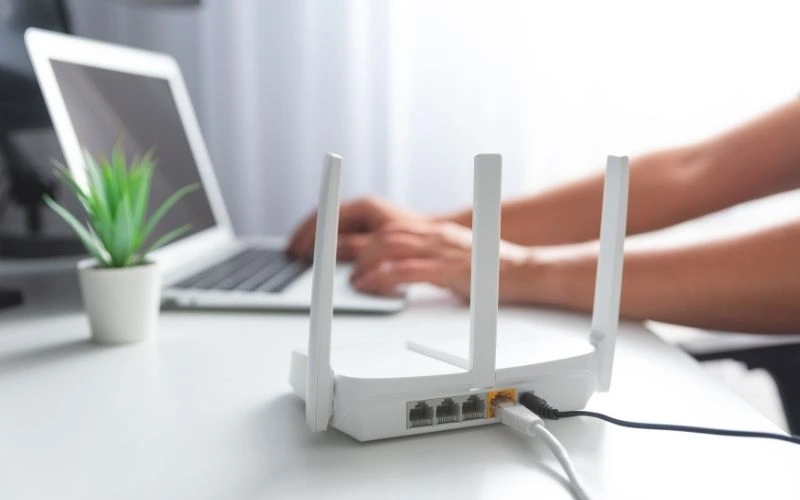
Portable MiFi devices — pocket-sized wireless routers that run on mobile data — are widely available for purchase and are a practical solution for expats who move around frequently or who are waiting for a fixed line to be installed.
Broadband Internet Connections
Broadband internet in Indonesia today is delivered primarily through fibre-to-the-home, cable, fixed wireless and mobile broadband via 4G and 5G networks. For expats living in major cities, fibre-to-the-home (FTTH) is the most reliable fixed broadband option available. The two providers most frequently recommended by the expat community are IndiHome, operated by Telkom Indonesia and offering the widest national coverage, and Biznet, which has expanded its fibre network significantly across Java and Bali and is widely regarded as offering strong and consistent speeds. Pricing, availability and speeds vary by location — checking which providers cover your specific address before signing a lease is strongly recommended.
There are a number of ISPs offering broadband services across Indonesia. As availability and packages change regularly, it is worth checking directly with providers to confirm what is offered at your address.
Broadband Cable Connections
Cable broadband delivers your internet connection through co-axial cable and is capable of carrying high-speed data alongside television services simultaneously. In Indonesia, cable broadband is available in selected urban areas, primarily through FastNet by LinkNet. Where both cable and fibre are available at the same address, fibre connections have generally become the preferred option due to more consistent speeds.
With cable connections, your speed depends not only on the provider’s infrastructure but on how many users in your immediate area are online at the same time. This is particularly noticeable during peak evening hours in residential areas.
Some providers offer packages with different bandwidth levels, either shared or dedicated. For corporate subscribers, dedicated bandwidth options are available at higher cost.
Advantages of a cable internet connection:
A cable connection is always on — 24 hours a day. There is no single monthly fee for unlimited access and no unexpected disconnects. The connection can serve more than one device in the home, though connecting multiple computers simultaneously may require additional equipment.
Disadvantages of a cable internet connection:
If you experience connection problems, resolving them can involve being passed between the cable company and your ISP’s customer service teams. During peak hours in densely populated areas, speeds can drop noticeably. Always-on connections also carry greater security exposure — installing a firewall or security software on connected devices is sensible practice.
Cable connection costs:
Costs vary depending on provider, location, speed tier and whether the connection is personal or corporate. As pricing changes regularly, always confirm current packages and any promotional rates directly with the provider before signing up.
Satellite Internet Access
Satellite internet connects you to the internet via a dish or antenna installed at your property, making it particularly relevant for expats living in areas where fixed fibre and strong mobile coverage are not available.
One significant development for expats living outside major cities is the arrival of Starlink satellite broadband in Indonesia. Available in Indonesia since 2023, Starlink has been particularly welcomed by expats in more remote locations — parts of Lombok, Flores, Kalimantan, Sulawesi and rural Bali — where terrestrial options remain limited. Hardware costs and monthly fees are considerably higher than local providers, but the improvement in speed and reliability over other options in remote areas can be substantial. Current availability and pricing can be checked at starlink.com.
For building-wide or campus satellite connections, contact PT Telkom for information on enterprise satellite services.
4G and 5G Mobile Broadband
Mobile broadband is now the primary way most expats first get online in Indonesia, and for many it remains their main connection. Indonesia’s four main mobile operators each offer prepaid and postpaid data plans suited to a range of budgets and usage levels.
Telkomsel has the largest network and the best national coverage, including outside Java and Bali. It is generally the most reliable choice for expats who travel within Indonesia or who live outside the major urban centres.
Indosat Ooredoo Hutchison (IOH) was formed from the 2022 merger of Indosat Ooredoo and Hutchison 3 Indonesia. It offers strong urban coverage and competitive pricing across its range of plans.
XL Axiata provides good urban and suburban coverage and is popular for its data packages.
Smartfren is best suited to urban areas and is less recommended for expats who travel regularly to regional locations.
5G networks are currently available in selected areas of Jakarta, Surabaya, Medan and a small number of other major cities, though coverage remains limited compared to 4G.
Pricing for mobile data is very competitive by international standards. Prepaid data packages are widely available at minimarkets such as Indomaret and Alfamart, at operator stores and online. Postpaid plans typically offer better value for heavy users. As pricing and packages change frequently, check the relevant operator’s current website or visit a service centre for the most up-to-date options.
Wireless Connections
Fixed wireless internet connects users via radio frequency technologies including microwave and long-range Wi-Fi. Microwave transmission uses high-frequency radio waves and is particularly suited to data connections between buildings where a clear line of sight exists. It is most commonly used in business rather than residential settings.

Your ISP or IT service provider can advise on the fixed wireless options available in your area and help you source the necessary equipment. Infra-red links are used in some installations as they do not require a frequency licence and are less prone to interference.
Wi-Fi Hotspots
Free and low-cost Wi-Fi hotspots are widely available across Indonesian cities — in cafes, hotels, shopping malls, coworking spaces and many public areas. Apps such as WiFi Map, available on iOS and Android, can help you locate nearby hotspots. As with anywhere in the world, take sensible precautions when using public Wi-Fi for sensitive tasks and consider using a VPN.
For expats working remotely, Indonesia’s major cities — and Bali in particular — have a well-developed coworking space scene offering reliable high-speed connections, stable power supply and a professional working environment. This is worth considering as a supplement or alternative to a home fixed-line connection, particularly while you are getting settled.
Understanding Bandwidth
It helps to understand what bandwidth actually means when you are comparing ISP offers, because providers do not always make it easy to compare like with like.
Bandwidth is the bits-per-second transmission capacity of a connection — in other words, how much data can pass through it at any given moment. Think of it as a tunnel: a tunnel with a capacity of 50 Mbps can carry data packets up to that total volume simultaneously. When many users are online at the same time, those packets compete for space in the tunnel, which slows down the speed at which each individual user receives their data.
This is why ISPs are able to sell access to far more users than their total bandwidth would theoretically support — because not everyone is online at the same time. The problem arises when they are. All reputable ISPs monitor usage and purchase additional capacity when speeds regularly slow down, but the experience during peak hours can still vary.
There are other factors beyond your ISP’s total bandwidth that affect real-world performance. The bandwidth available at the international gateway your ISP connects through, the number of routers between you and the destination server, and the quality of the medium carrying the signal at each point in the chain all play a role.
For home users, the contention ratio — the number of users sharing a given amount of bandwidth — is one of the most useful questions you can ask a prospective ISP. For business or leased-line connections, asking for a 1:1 or 2:1 ratio rather than accepting a standard 4:1 or 8:1 ratio will make a significant difference to your experience, though the cost will reflect this.
Internet Quality Across Indonesia — What Expats Should Know
One of the most important practical realities for expats is that internet quality in Indonesia is not uniform. Where you live makes an enormous difference.
Jakarta and the greater Jabodetabek area offer the widest range of providers and generally the most competitive speeds and pricing. Fibre coverage is extensive and mobile data is fast and reliable across most of the metropolitan area.
Bali has seen significant infrastructure investment, particularly in the Denpasar, Seminyak, Canggu and Ubud areas where the expat and digital nomad population is concentrated. Biznet and IndiHome both have reasonable coverage across these areas, and 4G mobile data is generally reliable. More rural parts of Bali can still be inconsistent.
Surabaya, Yogyakarta, Bandung and Semarang are reasonably well served by both fibre and 4G, with IndiHome and Biznet the most commonly recommended fixed-line options.
Lombok, Flores, Sulawesi, Kalimantan and Papua — internet quality becomes progressively less predictable as you move to the outer islands. Mobile data via Telkomsel is the most reliable option in most areas, and Starlink has become a genuinely practical solution for expats in more remote locations who need reliable speeds for work.
If you are considering a long-term move to anywhere outside Java or Bali, research internet availability specifically for your intended neighbourhood before finalising accommodation — and factor this into your decision if remote work requires a dependable connection.
How to Choose
As internet access options in Indonesia have multiplied and improved, the challenge has shifted from finding any connection at all to finding the right one for your circumstances. A few principles remain constant regardless of which technology or provider you are considering.
Look at the options actually available at your specific address — provider websites and coverage maps are a starting point, but asking building management or neighbours what they use is often more reliable. Decide what you genuinely need in terms of speed, reliability and budget. Get advice from people currently using the services you are considering — expat forums remain a valuable source of real-world experience. Then make your decision with realistic expectations.
No provider in Indonesia — or anywhere — is immune to outages, slow periods or customer service frustrations. When a sales representative tells you that you will never have a connection problem again, treat that with appropriate scepticism. What you are looking for is a provider with good coverage at your address, a reasonable track record among people you trust, and a customer service team you can communicate with when things go wrong.
Internet Service Providers — Current Options
The provider landscape in Indonesia changes regularly. The list below reflects the major options available as of early 2026, but availability varies significantly by city and neighbourhood. Always confirm coverage at your specific address before committing to a provider.
Fibre (FTTH)
- IndiHome by Telkom Indonesia — the dominant national FTTH provider, available across most major cities and many smaller towns
- Biznet — highly regarded by the expat community; strong coverage across Java and Bali
- MyRepublic — available in selected cities
- CBN Fiber — available in selected areas of Jakarta and surrounding cities
Cable
- FastNet by LinkNet — available in selected urban areas
Satellite
- Starlink — recommended for remote and rural locations where terrestrial options are limited
Mobile Broadband (4G/5G)
- Telkomsel
- Indosat Ooredoo Hutchison (IOH)
- XL Axiata
- Smartfren
Frequently Asked Questions
What is the best internet provider in Indonesia for expats?
For fixed home connections in cities, Biznet fibre is consistently well-regarded by expats for speed and reliability where it is available. IndiHome has the widest national coverage. For mobile data, Telkomsel has the best national network. The right answer depends heavily on where in Indonesia you are living.
How do I get internet when I first arrive in Indonesia?
Buy a local prepaid SIM card at the airport or at a convenience store such as Indomaret or Alfamart. Telkomsel, Indosat Ooredoo Hutchison and XL Axiata all offer good prepaid data plans that will give you 4G access immediately while you arrange a fixed home connection.
Is Indonesian internet fast enough for remote work and video calls?
In Jakarta, Bali and other major cities, yes — fibre connections and strong 4G coverage make remote work very practical. Outside major urban areas the picture is less consistent. If reliable connectivity is essential to your work, research your specific location carefully before committing to accommodation, and consider Starlink as a primary or backup option in more remote areas.
How much does internet cost in Indonesia?
Residential fibre plans typically range from around Rp 300,000 to Rp 900,000 per month depending on speed and provider. Mobile data is very affordable — monthly prepaid packages offering generous data allowances are available from around Rp 50,000 to Rp 150,000. Prices change regularly; check with providers directly for current packages.
Is Starlink available in Indonesia?
Yes. Starlink has been available in Indonesia since 2023 and is particularly useful for expats in areas where fixed fibre and strong 4G are not available. Hardware and monthly costs are higher than local providers, but speeds and reliability in remote areas are considerably better than legacy alternatives.
What is IndiHome? Is it the same as Telkom Speedy?
IndiHome is Telkom Indonesia’s current home broadband product, delivered primarily via fibre-to-the-home. It replaced the older Speedy ADSL service. If you have seen references to Speedy online or in older guides, IndiHome is its modern equivalent.
For an exploration of how the internet has changed life as an expat, read A ‘Home away from Home’: Expatriates and the Internet.
If you have advice or recent experiences you would like to share regarding internet access in Indonesia, please send your contribution to the webmaster and we will consider it for inclusion. We are particularly interested in up-to-date experiences from locations outside Jakarta and Bali.
This page is generously sponsored by Indonet — Indonesia’s first ISP.