
Home » Practical Information » Services
Foot Reflexology
Amidst the hustle and bustle of our stress-filled lives in the metropolis of Jakarta are pockets of relief, peace and pleasure. Many Jakartans take a break from the rat race to relax and restore in one of the city's many reflexology centers.
Variations of the modern practice of reflexology existed in many of the ancient healing cultures with documentation of ancient use of reflexology in India, Egypt, China and Native American cultures. Different orientations to reflexology evolved as local healing practices and beliefs were incorporated into the ancient healing art. Now widely practiced across the world, variations of the reflexology techniques are known in other countries as Pressure Point Massage, Compression Massage, Pointed Pressure Massage, Vita-Flex, Zone Therapy, Reflex Zone Therapy or Reflexotherapy.
Firmly established in Jakarta for years, but just becoming more 'trendy' recently, Jakartans turn to reflexology (refleksi) for a multitude of physical complaints and its ability to relieve stress and relax the body and mind.
What to expect
A typical reflexology session begins by cleansing the feet with a warm bath or with a steaming towel. After the feet are clean and warmed the treatment begins. Your reflexologist may be a man or a woman, with men outnumbering women in most centers. You can tell truly experienced reflexologists by the calluses on the knuckles of their thumb and fingers!
At the outset, the reflexologist may ask you if you want the pressure
to be applied soft, medium, or hard. They should also ask you if you have any particular physical
complaints, so they can focus on the reflex points that will alleviate
these complaints.
medium, or hard. They should also ask you if you have any particular physical
complaints, so they can focus on the reflex points that will alleviate
these complaints.
The exact methods of the reflexology treatment depend on the skills of the reflexologist as well as how they were trained. Basically, reflex zones (nerve endings) in the feet are massaged or stimulated in order to encourage blood circulation and normalize the function of the body's internal organs to aid the body's own healing processes. Most practitioners in Indonesia use a non-scented cream to facilitate the movement of their hands across the reflex points.
A complete session focuses on the 65 reflex points on the feet, each of which corresponds to a particular gland, organ or body part. The reflexologist applies pressure with specific thumb, finger and hand techniques to the reflex points, looking for 'crystals' near the nerve endings. The theory advocates that nerve endings are unable to transmit their impulses because of these crystalline deposits that build up and block the pathway and thus circulation to/from the feet and the body parts and organs. Pressure is applied to the crystals to break them up. (Indonesian reflexologists refer to the crystals as pasir, or sand.)
As the reflexologist applies pressure to the various points, let him/her know if the pressure is too hard or too soft. A good reflexologist will look at your facial expressions and feel you tensing or jerking to avoid pain, and adjust the pressure accordingly. Feel free to ask which part of the body a particular reflex point is effecting, especially if you feel pain there! It is normal to feel some pain during a reflexology session, especially in early treatments. Pain levels will differ according to your physical health, tolerance to pain, the amount of pasir at the nerve ending and the reflexologist's strength and technique.
Reflexology treatments have been referred to as a kind of exquisite
torture. Torture when the practitioner hits a spot that is especially
sensitive or has a lot of crystals, and exquisite because of the relief
and feeling of wellbeing you experience after treatments. 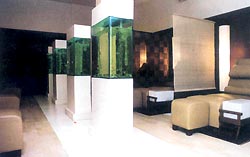 Most
centers in Jakarta offer a head/neck/shoulder reflexology at the end of
the foot reflexology, some for an additional cost. The additional treatment
focuses on reflexes in the back and shoulders and on loosening and relaxing
of stiff muscles.
Most
centers in Jakarta offer a head/neck/shoulder reflexology at the end of
the foot reflexology, some for an additional cost. The additional treatment
focuses on reflexes in the back and shoulders and on loosening and relaxing
of stiff muscles.
At the end of the treatment, spend some time with the reflexologist to find out where they felt crystals and which body parts these reflex points relate to. If you see the same reflexologist on a regular basis, they can keep track of your progress and should keep a written record of your visits.
While a responsible reflexologist will not claim to be able to cure your physical symptoms, they can offer treatments that will lead to alleviation of symptoms. Just as with other natural therapies, reflexology focuses on the body's own healing processes, using its own recuperative resources to heal and restore.
Reflexology treatments should not be given to pregnant women, women having their menstruation, children (who find the pain difficult to accept), and those with serious heart conditions. A responsible practitioner will also tell you that treatments cannot help people with certain extreme conditions: those who have damaged nerve endings through drug overdoses or sports injuries or those with advanced malignant tumors.
Some practitioners use a tool to apply pressure, a metal ball at the end of a stick. Tools are widely frowned on by professional reflexologists because they believe that the presence of crystals can best be determined by the sensitivity of the fingers and they know that the use of tools can lead to capillary damage.
Benefits of Reflexology
Some people may think that foot reflexology is just a fancy foot massage. However,
while goal of massage is to simply to relax muscles and relieve pain, a
reflexology treatment  focuses
on the nerve endings, which are found in and around muscles and bones in
the feet. The goal is not relaxation alone, but the healing and preventative
powers which affect the whole body, not just the feet.
focuses
on the nerve endings, which are found in and around muscles and bones in
the feet. The goal is not relaxation alone, but the healing and preventative
powers which affect the whole body, not just the feet.
The purported benefits of reflexology are many; a few of the more common claims of practitioners/customers are that reflexology:
- Relieves stress and the resulting tension, fatigue, insomnia and depression
- Improves blood circulation and concentration
- Promotes unblocking of nerve impulses
- Aids digestion
- Builds stronger body resistance
- Promotes general sense of well being and good health
Practitioners tout reflexology as a natural healing method, relieving many physical conditions without drugs and with no negative side effects! In fact, reflexology relaxation effects are so strong that recipients may fall to sleep at the end of an effective treatment. I, for one, find that a good treatment in peaceful surroundings leads to a deep relaxation of the body and mind. I inevitably become sleepy on the drive home and have either a great nap after I get home or a fantastic night's sleep that evening.
Reflexology Centers in Jakarta
Reflexology services are offered through in-home services, spas and beauty salons and dedicated reflexology centers. Each offers a different level of service, expertise and hygiene, with obvious differences in the attention paid to creating a relaxing atmosphere.
Without a doubt, the most relaxing and mind-altering experience can be found at Zen Living's center at Apartemen Menara Budi. Zen's treatments last from 75 minutes – 90 minutes - with an initial foot reflexology, followed by aromatherapy reflexology, with a choice of aromatic oils, such as such as: Uplifting Oil, Rejuvenating Oil, Reviving Oil, Pampering Oil, Soothing Oil, and Relaxing Oil. The foot reflexology is followed by a 15-minute neck and shoulder rub, which is guaranteed to bring tingles up your spine!
Owner Indira Bratanata explains her motivation for opening Zen Living, “I wanted to create a wellness centre in the middle of the city that allows expatriates and urban professionals to experience a quick escape from their daily activities. It's my goal that our clients feel totally relaxed and rejuvenated after a visit to Zen Living so that they can get back to their activities more effectively.”
My other personal favorite is the LifeSpa & Fitness Center at the Hilton, where Rizal and Farid work their magic to revitalize and rid the body of stress during the 50-minute treatment. Care has been given to provide a serene atmosphere, with comfortable chairs, gentle sounds of traditional Sundanese kecapi suling music, the subtle fragrance of Martha Tilaar Relaxing Oil and delicious ginger tea. LifeSpa offers Foot Reflexology in their Hilton and Millennium centers, in addition to a wide range of other day spa services and of course some of the best workout facilities in town.
Technical Advisor and Founder of LifeSpa & Fitness Centers, Brian Billdt, says “In additional to a first-class reflexology treatment, we've put a lot of thought into the atmosphere in the foot reflexology room for LifeSpa customers to ensure a quiet, relaxing environment. The treatment's relaxing and healing qualities can be further enhanced by subtle traditional music and the benefits of aromatherapy.”
In a pinch I'll stop in at one of the Oriental Health Centres found in malls throughout Jakarta. I say “in a pinch” because I am totally put off by the televisions in the centers, which distract from my sought-after relaxation experience. In a recent visit to the flagship center at Taman Anggrek Mall, the reflexologists were indeed more focused on the TV program than their customers. However, their prices are reasonable, the quality of the treatments is fair and it's easy to get treatment on a walk-in basis during the week. It's a good place to spend an hour and a half if you don't want to tromp around the mall with your teenagers!
So, if you're looking for a healthy way to relax and a natural high, or just a great self-pampering session, try out one of Jakarta's reflexology centers. Find out for yourself how reflexology treatments can lead to enhanced health, profound relaxation and pleasure, and a rejuvenation of the spirit!
Oriental Health Centre
Malls: Taman Anggrek, Citraland, Ambasador Mall, Perumahan Puri Kembangan
Tel. (021) 560-6556
Written by Danielle Surkatty
This article was originally published in Wine & Dine Indonesia
Photo Credits: LifeSpa and Fitness Centers and Zen Living.