


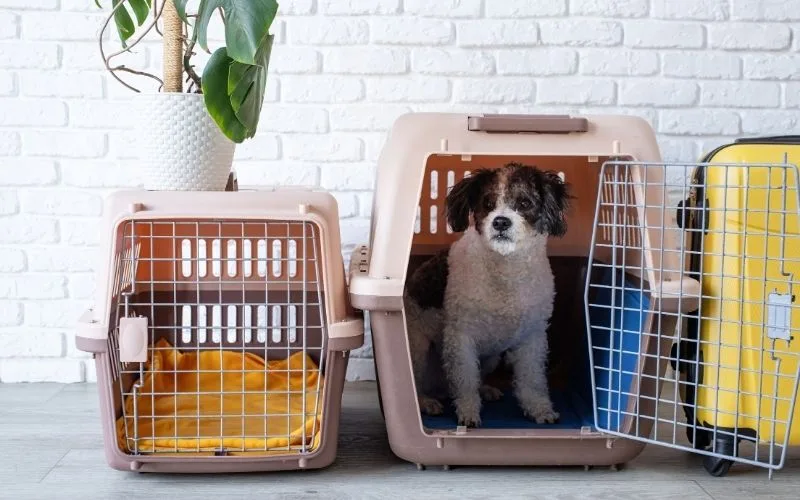
A Complete Guide to Import, Quarantine and Export Regulations
Note: Regulations change frequently. Always verify current requirements with your pet relocation agent and the Indonesian Ministry of Agriculture before travel.
Introduction to Bringing a Pet to Indonesia
Relocating a Pet to Indonesia requires careful planning, especially for dogs and cats. Indonesia has strict animal health and disease prevention rules, and the import process involves several documents, permits, vaccinations, and timing requirements. While the process is manageable, it is best to start at least three to four months before departure to avoid delays.
With proper preparation, your pet can join you safely in Indonesia. This guide explains the key steps for bringing dogs and cats into the country, including import permits, vaccination requirements, restricted zones, and practical relocation considerations. It also covers trusted pet relocation services and what to prepare when you eventually leave Indonesia with your pet.
For expats, the most important thing is to plan early, follow the official process carefully, and work with experienced support when needed. This will make bringing your Pet to Indonesia much smoother and less stressful.
Important: Permitted Entry Points and Quarantine Arrangements for Pets.Pets may enter Indonesia by air through five designated international airports: Jakarta (Soekarno-Hatta, CGK), Surabaya (Juanda, SUB), Medan (Kualanamu, KNO), Pekanbaru (Sultan Syarif Kasim II, PKU) and Manado (Sam Ratulangi, MDC).However — and this is critical — quarantine facilities are only available at Soekarno-Hatta Airport in Jakarta. If your pet is required to undergo quarantine (which applies to any pet arriving from a country not on Indonesia’s official rabies-free list), it must enter through Jakarta. In practice, the majority of expats route through Jakarta regardless, even if their final destination is Surabaya, Bali or elsewhere.Pets may never be imported or exported directly through Ngurah Rai Airport in Denpasar, Bali under any circumstances. Transit through Bali airport without leaving the terminal area is permitted.
Animals That Cannot Be Imported into Indonesia
Absolutely Prohibited
The following animals cannot be imported into Indonesia under any circumstances and any attempt to bring them into the country is a criminal offence under Indonesian Law No. 32/2024 and the 2019 Quarantine Act:
- All primates (monkeys, apes) as pets
- All CITES Appendix I listed species, which include great apes, tigers, leopards, rhinoceroses, elephants, marine turtles and many birds of prey
- Wolf hybrids (dogs crossed with wolves), unless five or more generations removed from the wolf in their pedigree
- Savannah cats (unless five or more generations removed from the serval in pedigree)
- Bengal cats (unless five or more generations removed from the Asian leopard cat)
- Bats of any species
- Golden Syrian hamsters (subject to additional PCR testing requirements)
Birds
The import of birds into Indonesia is only permitted from Singapore. Birds from all other countries are not permitted entry. This is due to ongoing avian influenza controls and is strictly enforced. If you are relocating with a parrot, cockatiel, or other bird from any country other than Singapore, you will not be able to bring it to Indonesia. Contact the Indonesian Ministry of Agriculture for the most current status on bird import restrictions, as these regulations are subject to change.
Country Embargoes
Indonesia currently maintains import embargoes on pets from the following countries. These are not breed-specific but country-wide bans:
- Taiwan and the People’s Republic of China (including Hong Kong and Macau): embargo on all pets
- Thailand: embargo on the import of dogs
These embargoes are enforced and there are no known exceptions. If you are relocating from one of these countries, you will need to take your pet to a third country, complete all Indonesian import requirements from there, and re-enter via Jakarta.
Restricted Zones Within Indonesia
Even for animals that are legally importable, certain regions of Indonesia are classified as rabies-free zones and are protected from animal imports unless the pet is coming from a country that Indonesia also considers rabies-free. Pets cannot be imported directly to the following areas, and overland transfer from Jakarta is the only route:
- Bali (strict ban following a 2008 rabies outbreak)
- Madura
- Nusa Tenggara Barat (Lombok and surrounding islands)
- Nusa Tenggara Timur (including Flores and Komodo)
- Maluku (the Moluccas)
- West Papua and Papua (Irian Jaya)
- West Kalimantan
- All islands in the Sumatra zone
If you are moving to Bali, your pet must enter through Jakarta, complete its quarantine there, and then be transported overland by road and ferry or by domestic cargo. Specialist pet relocation companies manage this transfer regularly, but it adds significant cost and time. The overland journey from Jakarta to Bali takes approximately 20 hours and involves a vehicle ferry crossing. Direct import to Bali through Ngurah Rai Airport is not permitted under any circumstances. Budget accordingly, and work with one of the recommended relocation agents listed later in this guide who manage the Jakarta-to-Bali transfer routinely.
Indonesia’s Rabies-Free Country List Indonesia classifies the following countries as rabies-free, meaning pets from these countries may be eligible to enter rabies-restricted zones: Australia, New Zealand, Fiji, Hawaii (USA), Japan, Ireland, Iceland, Bermuda, Brunei Darussalam, Sabah, Sarawak, Cyprus, Denmark, Sweden, Norway, Malta, United Kingdom, Singapore, and the United States. Pets from all other countries are subject to the restricted-zone prohibitions listed above.
Step-by-Step Pet Import Process — Dogs and Cats

Start this process at least three to four months before your planned travel date. The steps below must be completed in the order given. Do not begin a later step before the earlier one is complete, as the timing of vaccines, tests and permits is strictly regulated.
Step 1: Microchip Your Pet (ISO Standard)
Your pet must be implanted with an ISO 11784/11785-compliant microchip. This is a critical first step because all subsequent vaccinations, tests and documents are linked to the microchip number. If your pet is already microchipped, verify that the chip complies with ISO standard.
- The microchip must be implanted before any rabies vaccination is administered
- If your pet has already received rabies vaccination before being microchipped, the vaccination course must be restarted after microchipping
- Register your pet’s microchip details in an internationally recognised database
Where to get this done: Any registered veterinary clinic in your country of origin.
Step 2: Rabies Vaccination
Your pet must receive a rabies vaccination from an inactivated (killed) vaccine only. Live or modified live rabies vaccines are not accepted. The timing rules are strict:
- The vaccination must be given no sooner than 30 days before entry into Indonesia
- The vaccination must have been given no more than 12 months before entry
- Puppies and kittens must be at least three months old to receive the rabies vaccine, which means the minimum age for entry into Indonesia is four months
- No additional rabies vaccination may be given during the quarantine period in Indonesia, so time your vaccination carefully
Where to get this done: Any USDA-accredited, government-approved or registered veterinary clinic in your country of origin. The administering veterinarian must sign, stamp and record the vaccination details in your pet’s vaccination record.
Step 3: Core Vaccinations
In addition to rabies, your pet must have current core vaccinations. These must be administered between 30 days and 12 months before entry:
- Dogs: Distemper, Hepatitis, Leptospirosis and Parvovirus (DHLP or DHLPP)
- Cats: Feline Viral Rhinotracheitis, Calicivirus and Panleukopenia (FVRCP), and Feline Leukemia
All vaccinations must be recorded in an international veterinary passport with the vaccine vial sticker, the veterinarian’s signature and the clinic stamp included as verification.
Step 4: Rabies Titre Test (Antibody Test)
This is one of the most time-consuming steps and must not be left until the last minute. A blood sample must be taken from your pet by a licensed veterinarian and sent to an accredited laboratory for a FAVN (Fluorescent Antibody Virus Neutralisation) or RNATT test.
- The test must show a rabies antibody level of at least 0.5 IU/ml
- The blood sample must be taken at least 30 days after the rabies vaccination
- The test must be conducted by a laboratory accredited by the OIE (World Organisation for Animal Health)
- Allow two to four weeks for results to be returned from the laboratory
Where to get this done: Your government-approved veterinarian will draw the blood sample. The sample is then sent to an OIE-accredited laboratory. In the United States, the Kansas State Veterinary Diagnostic Laboratory (KSVDL) is widely used. In the UK, the APHA laboratory at Weybridge. In Australia, the CSIRO AAHL laboratory. In Southeast Asia, the Onderstepoort laboratory accreditation applies in some countries. Ask your vet or pet relocation agent for the nearest accredited facility.
Step 5: PCR Test (Required for Cats from Certain Countries)
A PCR test for COVID-19 (SARS-CoV-2) is currently required for cats entering Indonesia from the United States, the Netherlands and Russia. The test must produce a negative result before export. This requirement also applies to minks, ferrets, tigers, lions, Golden Syrian Hamsters, bats and primates.
Dogs from the United States may choose to have a PCR test done upon arrival in Indonesia to reduce their quarantine period from 14 days to 7 days.
Note: This requirement reflects Indonesian government policy as of March 2026. Given that COVID-19 regulations continue to evolve, verify the current status of this requirement with the Indonesian Ministry of Agriculture or your pet relocation agent before travel.
Step 6: Obtain the Import Permit
An Import Permit must be obtained before your pet departs from your home country. This is a non-negotiable requirement and your pet will not be allowed into Indonesia without one. The permit is issued by:
Director of Animal Health, Ministry of Agriculture Directorate General of Livestock and Animal Health Services Building C, 9th Floor, Jl. Harsono RM No. 3, Pasar Minggu, Jakarta Selatan 12550Website: pertanian.go.id (Indonesian Ministry of Agriculture)Online system: SIMREK (Sistem Informasi Rekomendasi Ekspor dan Impor Komoditi Pertanian)
To apply for the Import Permit, you or your agent must submit:
- A copy of your passport
- A valid health certificate from a licensed veterinarian in your country of origin
- Your pet’s current vaccination record
- Rabies titer test results
- A letter of recommendation from the Provincial Animal Breeding Services office in the province of destination in Indonesia
Practical notes:
- The permit takes four to five weeks to be issued
- The permit is valid for 90 days from the date of issue
- The import permit is valid for 30 days from the intended arrival date
- No changes can be made to the permit after it is issued, so ensure all details (pet name, microchip number, breed, colour, sex) are correct before submission
- Most expats use a local pet relocation agent in Indonesia to handle the permit application, as the process requires a local presence and knowledge of the system
- Purebred dogs and cats require an additional Certificate of Breeding Value
Step 7: Health Certificate from Your Country of Origin
A licensed veterinarian in your country of origin must issue an official Health Certificate within 10 days of your departure. For US-based expats this is USDA Form 7001, which must then be endorsed by the USDA APHIS. For other countries, the equivalent government-endorsed veterinary health certificate applies.
The certificate must state that:
- Your pet has been examined and is fit to travel
- The pet shows no signs of clinical illness
- The pet does not originate from an area subject to rabies restrictions
- All required vaccinations are current
- The microchip number is included and matches all other documents
Where to get government endorsement:
- USA: USDA APHIS (aphis.usda.gov) — endorsement required before departure
- UK: APHA (Animal and Plant Health Agency)
- Australia: Department of Agriculture, Fisheries and Forestry
- Other countries: contact your national government veterinary authority
Traveling With Your Pet Versus Shipping Them Separately
One of the most important practical decisions you will make is whether to bring your pet on the same flight as you, or ship them as unaccompanied air cargo — either before you arrive or after you have settled in. Both are legitimate and commonly used options, and each has real advantages and drawbacks. The documentation requirements are identical either way.
Option 1: Your Pet Travels With You on the Same Flight
This means your pet travels either in the cabin (small pets only) or in the pressurised cargo hold of the same aircraft you are on. This is the option most owners prefer emotionally, and it has practical benefits: you can monitor your pet through each stage of the journey, check in together, and be present on arrival in Jakarta to hand over documents to quarantine officials yourself.
- Pets up to approximately 10kg including their carrier may travel in the cabin under the seat in front of you, depending on the airline
- Pets over 10kg, or breeds not permitted in cabin, will travel in the pressurised cargo hold as excess baggage on the same flight, but in a separate compartment
- Not all airlines accept pets. Etihad Airways and KLM are frequently recommended by expats for Indonesia routes as both permit pets in cabin and cargo hold. Always confirm with your specific airline before purchasing tickets
- Brachycephalic (snub-nosed) breeds such as Bulldogs, Pugs, Boxers, French Bulldogs and Persian cats may be refused by airlines due to breathing risk at altitude
- Notify the quarantine station at Soekarno-Hatta at least two days before your arrival so officials can be ready to receive your pet
- On arrival, you clear immigration and customs yourself, then proceed with your original documentation to the quarantine officials who will take charge of your pet
- Your pet is taken from the airport directly to the quarantine station — you do not take them home first, even if all paperwork is complete
The key advantage of this option is peace of mind. The key limitation is that not all airlines will accept your pet, particularly on long-haul routes or with large or snub-nosed breeds.
Option 2: Your Pet is Shipped as Unaccompanied Air Cargo
This means your pet travels on a separate flight, managed entirely by your pet relocation agent or a specialist air freight company. You may choose this route because your airline does not accept pets, because your pet is too large for passenger travel restrictions, or simply because you want to settle into your new home before your pet arrives.
- Unaccompanied pets travel as air cargo, handled by the freight division of the airline
- An agent licensed by the Indonesian government must handle the clearance of your pet through customs and into quarantine — you cannot clear an unaccompanied animal yourself
- This is the route most professional pet relocation companies use, as they have the necessary licences and established relationships with quarantine officials at Soekarno-Hatta
- Flights should be as direct as possible. Layovers should be kept short and, where possible, should not involve changing airlines — a mid-journey airline change complicates cargo handling considerably
- If your pet’s route involves a layover in the European Union, additional EU transit requirements apply — your agent will advise
Many expats find that shipping their pet separately is actually the less stressful option for the animal, as the relocation agent manages every detail at the airport without the owner also trying to navigate their own arrival. If you are relocating with children or a large household, this deserves serious consideration.
Option 3: Shipping Your Pet After You Have Already Arrived in Indonesia
Some expats arrive in Indonesia first and then arrange to bring their pet from home separately, weeks or months later. This is entirely possible and sometimes the most practical approach — for example, if you needed to find pet-friendly accommodation first, or if your pet was being cared for by family while you settled in.
- All documentation and import permit requirements are identical — there is no simplified process because the owner is already in Indonesia
- The import permit is still required before your pet departs from your home country, and still takes four to five weeks to obtain
- Your pet will arrive as unaccompanied cargo and must be cleared by a licensed Indonesian agent on your behalf
- The advantage of this approach is that you can arrange pet-friendly accommodation, find a local veterinarian, and properly prepare your home before your pet arrives
- Your Jakarta agent will send regular updates, photos and videos during the quarantine period
Which Option is Right for You?
| Consideration | Travel Together | Ship Separately / After Arrival |
|---|---|---|
| Emotional reassurance | High — same flight, present on arrival | Relies on agent photos and updates |
| Airline restrictions | Many airlines do not accept pets on long-haul routes | Not an issue — freight is independent of passenger rules |
| Large or snub-nosed breeds | Often not permitted in cabin or hold | Cargo freight is more flexible on breed and size |
| Agent required at arrival? | Recommended — to assist with document handover | Required — a licensed agent must clear unaccompanied cargo |
| Owner present at quarantine? | Yes — you can hand documents personally and visit immediately | No — agent manages handover, but you can visit from Day 1 |
| Best for | Small pets, shorter routes, airline-accepted breeds | Large pets, long-haul routes, or when settling in first |
Step 8: IATA-Approved Travel Crate
Your pet must travel in an IATA-compliant carrier. The crate must be:
- Large enough for the animal to stand, turn around and lie down comfortably
- Constructed of hard plastic or solid material, not soft-sided fabric
- Equipped with secure ventilation on at least three sides
- Fitted with food and water containers accessible from outside
- Labelled with your contact information, the pet’s name, and ‘Live Animal’ markings
Airlines have varying crate requirements and size limits for cabin versus cargo transport. Pets weighing more than 10kg will generally travel in the cargo hold. Brachycephalic (snub-nosed) breeds such as Bulldogs, Pugs, Boxers, Persian cats and similar may face airline restrictions due to breathing risk during flight. Check with your chosen airline well in advance.
Step 9: Arrival in Jakarta and Quarantine
On arrival at your designated entry airport, your pet will be met by Indonesian Quarantine Agency (Barantin) officials. You must present all original documents at this point — do not bring copies only. If your pet requires quarantine, you will already have routed through Jakarta, as that is the only airport with quarantine facilities. If your pet is from a rabies-free country, does not require quarantine, and your final destination is Surabaya, Medan, Pekanbaru or Manado, entry through those airports is permitted, subject to your import permit specifying the correct entry point.

Documents required at arrival:
- Original Import Permit
- Original Health Certificate from country of origin
- Original vaccination record/international pet passport
- Rabies vaccination certificate
- Rabies titer test results
- Your passport (owner’s identification)
- PCR test result if required
Quarantine period:
- 7 days if your pet arrives with complete documentation from a rabies-free country, or if dogs from the US have completed a PCR test prior to arrival
- 14 days for pets from non-rabies-free countries with complete documentation
- Up to four to six months if documentation is incomplete or the animal’s health is in doubt
Quarantine takes place at the Animal Quarantine Station at Soekarno-Hatta Airport. The address is:
Quarantine Station — Soekarno-Hatta International AirportGedung Karantina Pertanian, Bandara Internasional Soekarno-Hatta, Kota Tangerang, Banten 15126Tel: +62-21-550-7931 | Fax: +62-21-550-7930Note: The quarantine station is located within the airport complex — it is accessible without departing the airport area.
Can You Visit Your Pet During Quarantine?
Yes — and most owners do. You are permitted to visit your pet at the quarantine station during the quarantine period, and this is actively encouraged. After you have cleared immigration and customs on arrival, you can go directly to the quarantine area to see your pet before you leave the airport. The station is located within the airport complex.
- Visits are allowed during the quarantine period — contact the quarantine station to confirm current visiting hours before you go
- If you are working with a relocation agent, they will typically arrange visits and accompany you on your first visit to help with any communication
- You may bring food and familiar items for your pet, but check with the quarantine station first as rules on what can be brought in may apply
- Agents routinely send photo and video updates to owners who cannot visit in person — arrange this explicitly when you book your agent’s service
- If your pet requires any additional veterinary testing during quarantine, you will be notified and will be responsible for any associated fees
Knowing that you can visit is a significant reassurance for most owners. The quarantine period, while frustrating, is manageable — particularly when you are able to see your pet in person and confirm they are being well cared for.
If your pet does not meet all entry requirements on arrival, Indonesian authorities have the right to impose extended quarantine, return the pet to the country of origin at the owner’s expense, or in serious cases, euthanise the animal. There are no exceptions. This is why working with an experienced pet relocation agent is strongly recommended.
Recommended Pet Relocation Companies for Indonesia
Given the complexity of Indonesia’s pet import process, the vast majority of expats use a specialist pet relocation company to manage the import permit, quarantine coordination and documentation. The three companies below are consistently well-reviewed by expats who have used them for moves to and from Indonesia. All three are experienced specifically with Indonesian regulations.
1. Groovy Pet Transport — Jakarta
Groovy is one of Indonesia’s longest-established pet relocation companies, founded in 1990 and with over 15,000 pets successfully transported. They are based in Jakarta and have a particularly strong reputation for Indonesian-specific processes, including the import permit, quarantine management and overland transfers to Bali. They also operate a full-service pet care facility including boarding, grooming, veterinary care and a pet cafe.
- Based: Jakarta (Tangerang), Indonesia
- Services: Import, export, quarantine management, overland transfer, boarding, vet care
- Website: groovypettransport.com
- Review highlights (from verified Google reviews): ‘Ms Febby and the team were excellent, with clear communication throughout the administrative process, and diligent during the stressful arrival and quarantine process.’ Multiple reviewers specifically praise the regular photo and video updates during quarantine and direct contact outside office hours.
- Note: Particularly recommended for moves to Bali as they manage the Jakarta-to-Bali overland transfer.
2. Jetfast Pet Express — Jakarta / Southeast Asia
Jetfast has over 20 years of experience in pet transport specifically across Southeast Asia, with offices in Jakarta, Kuala Lumpur, Brunei and Australia. They specialise in both imports into Indonesia and exports out, and have deep experience with Indonesian quarantine procedures. Their reviews consistently praise specific staff members (Rudi and Emilie are frequently named) and the quality of communication throughout the process.
- Based: Jakarta, Indonesia and wider Southeast Asia
- Services: Door-to-door international pet relocation, import, export, quarantine management, 135-country network
- Website: jetfastpetexpress.com
- Review highlights: ‘Very professional with updates… kept us informed all through the process.’ ‘They did a great job at bringing our cats safely into Indonesia. Rudi was always fast answering our questions and he quickly helped one of our cats when she had a medical emergency.’ Multiple reviewers report using the service twice, which is a strong indicator of trust.
- Note: Particularly experienced with Australia-to-Indonesia and Indonesia-to-New Zealand routes.
3. Pet Travel Indo — Jakarta
Pet Travel Indo is a well-reviewed Indonesia-based service with over 1,000 successful relocations. They offer both international and domestic pet transport, including inter-island routes within Indonesia. Their reviews praise clear communication, professionalism and stress-free handling of paperwork. They are a strong option for families moving between Indonesian cities as well as internationally.
- Based: Indonesia (Jakarta/Surabaya)
- Services: International import/export, domestic inter-island transport, door-to-door, cargo and hand carry
- Website: pettravelindo.com
- Review highlights: ‘They handled everything from processing the travel documents to check-in with care and professionalism.’ ‘From start to finish they made what could have been a stressful process feel smooth and worry-free. They were on top of every detail and always kept me updated in real time.’
- Note: A good option for families already in Indonesia moving between cities or departing.
Cost guideThe cost of pet relocation to Indonesia varies significantly based on the pet’s size, weight, breed and country of origin. As a general guide, relocating a small dog (around 6kg) such as a Jack Russell Terrier costs approximately USD 2,000 as a starting point. Moves to Bali cost more due to the overland transfer from Jakarta. All three companies above offer bespoke quotes. Always get quotes from at least two companies before committing.
Importing Other Types of Pet to Indonesia
When bringing a Pet to Indonesia, the requirements can vary depending on the animal type. Dogs and cats usually follow the standard rabies-related import process, but other pets may have different health, permit, or documentation rules.
Rabbits and Small Mammals
Rabbits and small mammals such as guinea pigs do not usually require rabies vaccination. However, they still need a valid health certificate from a licensed veterinarian in the country of origin. An import permit is also required before the animal can enter Indonesia.
Some animals may have additional requirements. For example, Golden Syrian Hamsters may require a negative PCR COVID-19 test. Because rules can change depending on the animal species, it is best to confirm the latest requirements with the Indonesian Ministry of Agriculture before relocating your Pet to Indonesia.
Reptiles, Amphibians, Fish, and Exotic Pets
Reptiles, amphibians, tropical fish, and invertebrates are not subject to standard rabies vaccination requirements. However, they may be regulated under CITES rules, especially if the species is protected or listed under Appendix I, II, or III.
If your pet is covered by CITES, you may need additional permits from the Indonesian Ministry of Environment and Forestry, as well as the relevant authority in your country of origin. Before importing any reptile or exotic animal, check its CITES status and consult the Indonesian Ministry of Agriculture.
Purebred Dogs and Cats
Purebred dogs and cats must follow the standard import process for bringing a Pet to Indonesia. In addition, they may require a Certificate of Breeding Value from the national kennel club or official breed registry in the country of origin.
This document helps verify the animal’s breed status and should be prepared together with the other required import documents.
Practical Notes for Living with Pets in Indonesia
- Most apartments, serviced apartments and guesthouses in Indonesia do not allow pets. Landed houses and private villas are significantly more pet-friendly. Confirm your accommodation’s pet policy before your pet arrives.
- Indonesia’s tropical climate means extra vigilance is required for ticks, fleas, heartworm and heat-related illness. Regular preventive treatment is essential and your veterinarian in Indonesia will advise on locally relevant products.
- For Muslim household staff, dogs may be considered haram (ritually unclean). Discuss this sensitively with any domestic helpers before hiring, and clarify expectations around dog-related duties.
- Veterinary care is widely available in Jakarta, Surabaya, Bali and Bandung. In smaller cities and rural areas, specialist veterinary services may be limited.
- Domestic travel within Indonesia with a pet requires permits. Air travel with a pet on domestic routes requires coordination with the airline and the relevant quarantine station. Do not assume domestic rules are simpler than international ones.
Exporting Your Pet When You Leave Indonesia
When the time comes to leave Indonesia, be aware that even if you brought your pet into the country with you, you cannot simply leave with it. An export permit is required for all dogs, cats and other animals leaving Indonesia. Start this process at least six to eight weeks before your departure date.
Export Requirements for Dogs and Cats
The following documents are required to export a pet from Indonesia:
- Recommendation Letter from the Regional Department of Livestock (Dinas Peternakan) in your province of residence in Indonesia
- Export Permit issued by the Ministry of Agriculture, Directorate General of Livestock and Animal Health Services (same office as the import permit, Building C, 9th Floor, Jl. Harsono RM No. 3, Pasar Minggu, Jakarta Selatan 12550)
- Current Rabies Vaccination Certificate — the vaccination must have been given at least 30 days before export
- Health Certificate issued by an official veterinarian at your location in Indonesia, confirming the pet is fit to travel
- The animal’s microchip must be functioning and readable
- Notify the Animal Quarantine Station at the departure airport (Soekarno-Hatta) at least two days before your flight, and submit all required documentation for inspection
Additional Export Requirements for Birds
Birds require an export permit from the Ministry of Environment and Forestry (not Agriculture), as birds fall under the forestry and conservation portfolio in Indonesia. This is separate from the standard pet export process and may take additional time. If your pet bird is a CITES-listed species, you will also need a CITES export certificate.
Quarantine Requirements in Your Destination Country
Once your pet leaves Indonesia, the entry requirements of your destination country will apply. Some countries impose mandatory quarantine on arrival that can significantly extend the process. Countries known for particularly strict pet import controls include:
- Australia and New Zealand: mandatory quarantine periods, strict documentation, no exceptions
- United Kingdom: strict post-Brexit import rules, microchip and rabies vaccination requirements, no quarantine but advance preparation essential
- Singapore: mandatory quarantine for dogs from most countries
- Hong Kong: quarantine required depending on country of origin
- Hawaii (USA): treated as a separate jurisdiction with its own strict rabies-free zone controls
If you are returning to the United States with your dog, note that as of the updated CDC rules, USDA-endorsed export health certificates issued after July 31, 2025 will not be accepted for re-entry into the United States. Contact the CDC directly at [email protected] for the most current US re-entry requirements.
Using a Pet Relocation Agent for Export
The same companies recommended for import (Groovy Pet Transport, Jetfast Pet Express, Pet Travel Indo) all handle exports from Indonesia and are experienced in navigating the outbound Indonesian paperwork as well as coordinating with agents in your destination country. Given the complexity of export requirements combined with destination-country import rules, using an agent for the export process is at least as important as using one for the import.
Key Official Contacts and Resources
| Authority | Responsibility | Contact / Website |
|---|---|---|
| Indonesian Ministry of Agriculture — Directorate of Animal Health | Import and export permits for dogs, cats and other pets | Building C, 9th Floor, Jl. Harsono RM No. 3, Pasar Minggu, Jakarta Selatan 12550. Website: pertanian.go.id |
| Badan Karantina Indonesia (Barantin) | Quarantine management at entry and exit points | Website: karantinaindonesia.go.id |
| Ministry of Environment and Forestry (KLHK) | CITES permits, wildlife export permits, birds | Website: menlhk.go.id |
| USDA APHIS (for US residents) | Health certificate endorsement for US-origin pets | Website: aphis.usda.gov/pet-travel |
| CITES species database | Check CITES status of your pet species | Website: cites.org or speciesplus.net |
| IPATA (International Pet & Animal Transportation Association) | Find accredited pet relocation agents worldwide | Website: ipata.org |
Frequently Asked Questions About Bringing Your Pet to Indonesia
Can I visit my pet during quarantine?
Yes. If your Pet to Indonesia requires quarantine at Soekarno-Hatta Airport in Jakarta, owners are usually allowed to visit during the quarantine period. The quarantine station is located within the airport complex, and visits can typically be arranged after you have completed your own arrival formalities.
It is best to contact the quarantine station or your pet relocation agent in advance to confirm current visiting hours. If you cannot visit in person, reputable relocation agents usually provide regular photo and video updates.
Can I bring my pet directly to Bali?
No. Direct import of pets through Ngurah Rai Airport in Bali is not permitted. If your Pet to Indonesia requires quarantine, it must enter through Soekarno-Hatta Airport in Jakarta, where quarantine facilities are available.
After quarantine, your pet can be transported to Bali by a specialist pet relocation company, usually by road and ferry. This journey can take around 20 hours, so it should be planned carefully with an experienced agent.
How long does the whole process take?
You should allow at least three to four months to bring your Pet to Indonesia. Some steps, such as rabies antibody testing, import permit approval, veterinary checks, and health certificates, have specific timelines that cannot be rushed.
The health certificate is usually issued close to departure, while other documents must be prepared weeks in advance. Starting early helps reduce the risk of delays or rejected paperwork.
Is there a breed ban in Indonesia?
Indonesia does not generally ban specific dog or cat breeds. However, certain hybrid animals, such as wolf hybrids or some wild-hybrid cat breeds, may be restricted.
Brachycephalic breeds such as Bulldogs, Pugs, French Bulldogs, Boxers, and Persian cats may also face airline restrictions due to breathing risks during travel. This is usually an airline policy rather than a government ban.
What happens if my pet’s paperwork is incomplete on arrival?
Incomplete documentation can cause serious problems when bringing a Pet to Indonesia. Your pet may face extended quarantine, return to the country of origin, additional costs, or in serious cases, refusal of entry.
This is one of the main reasons many expats choose to work with an experienced pet relocation agent. They can help check documents, coordinate permits, and reduce the risk of mistakes before travel.
Can I bring my cat from the USA?
Yes, but cats from the United States may have additional requirements, including specific health checks or test results before export. You should confirm the latest requirements before booking travel, as pet import rules can change.
Your cat may also need to complete quarantine on arrival in Jakarta, depending on Indonesia’s current import rules and the country classification at the time of travel.
Do I need a permit to travel domestically within Indonesia with my pet?
Yes. Domestic travel with pets in Indonesia, including inter-island travel or air travel, usually requires permits from the relevant animal health authority.
Do not assume that moving your pet within Indonesia is paperwork-free. This is especially important if you plan to relocate from Jakarta to Bali or travel between islands.
Is it expensive to bring a pet to Indonesia?
Yes, bringing a Pet to Indonesia can be relatively expensive compared with some other destinations. Costs may include veterinary fees, lab tests, import permits, airline pet handling fees, quarantine charges, and relocation agent service fees.
For many expats, a realistic budget can start from around USD 2,000 to 3,000, depending on the country of origin, pet size, airline, and whether additional transport to Bali or another city is needed.
Can I take my Indonesian-acquired pet home when I leave?
Yes. If you adopt or acquire a pet while living in Indonesia, you can take your pet with you when you leave. However, you will need an export permit and must also follow the import rules of your destination country.
Start the export process at least six to eight weeks before departure to allow enough time for permits, vaccinations, health certificates, and airline arrangements.
This article was compiled by the expat.or.id editorial team from official government sources including the US USDA APHIS (aphis.usda.gov), PetTravel.com, Barantin (karantinaindonesia.go.id), and the Indonesian Ministry of Agriculture (pertanian.go.id). Company reviews are sourced from verified Google reviews. Regulations change regularly — always verify current requirements before travel.