|
|
Home » Practical Information » Indonesian Customs and Culture » Handicrafts Cap in Hand: The Cap Man in Jakarta
|
Translate this Page |
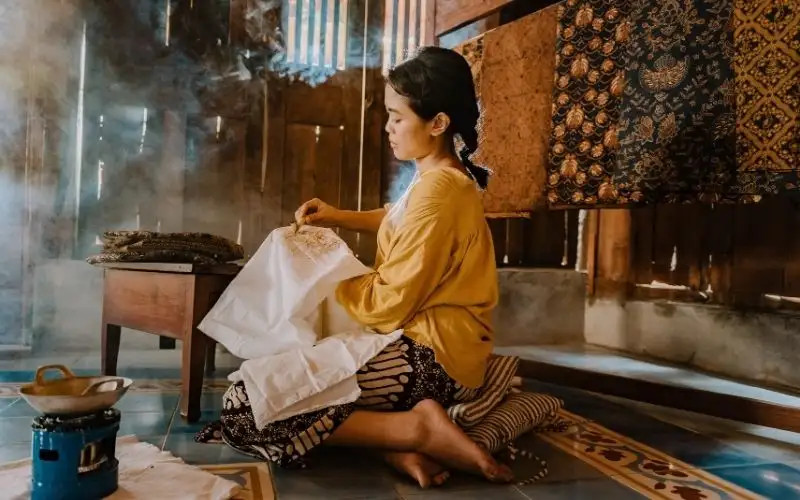
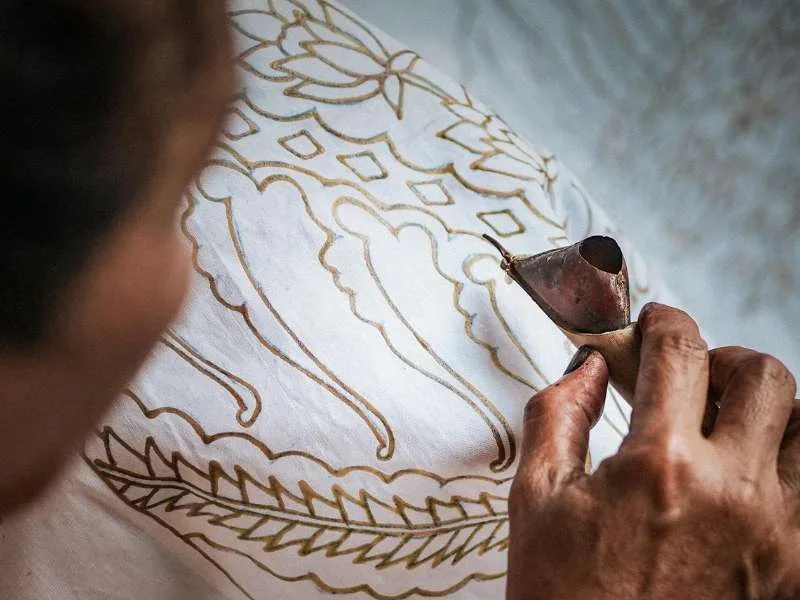
Tucked at the end of an alley off Jl. Bangka Raya, opposite a beautiful mosaic mosque you'll find the Cap Man. No, he doesn't make hats - cap refers to the copper stamp used in the production of batik, cap batik. The Cap Man is best known for his ingenious combination of the cap (pronounced chop) with the beauty of native woods to create beautiful, functional items. Who is the Cap Man?Mohammad Sidik, a native Betawi, lived in Jakarta's batik district, Karet Tengsin. He noticed that foreigners who visited nearby batik factories bought a lot of batik. Thinking they may be interested in buying cap as well, in the early 70s he began buying old cap from the factories and restoring them. He peddled the cap on a bicycle house-to-house in expat neighborhoods, then later by motorcycle. Business grew and Pak Mohammad moved to Pela and opened a workshop in his home, where it remains today, over 25 years later. The business is run by the original owner's son, M. Nuzur, and his children, Jamal and Tika. While still selling restored cap, they are best known today for their fine crafted wooden items inset with cap and made-to-order furniture. Pak Nuzur also carries accessories made from water snake and python snakeskin, including belts, purses, bags, wallets. Ask him to unroll and show you a meters-long python skin. Snakeskin items can also be special made. Custom-made Wood Crafts
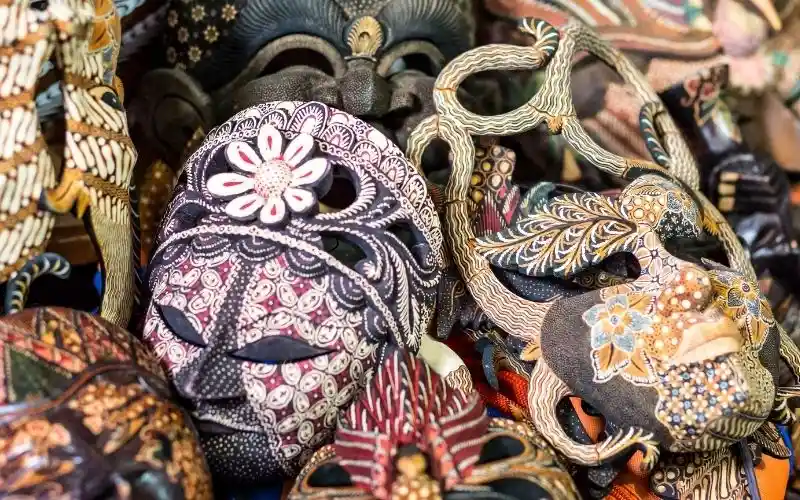
The shop is a veritable treasure trove of mahogany and teak collectibles
and dart boards, collector's racks for golf balls or spoons, lazy susans,
bookends, trays, guitar stands, coasters, solitaire boards, mirrors and
photo frames, cigarette and cigar boxes, cribbage boards and dice games,
medal display cases, trivets, CD cases, jewelry boxes and cabinets and
cupboards of all sizes. All are made on site, with intricate carving or
inset with copper stamps. Custom-made furniture is popular too. Bring in a picture of what you want, specify the dimensions, choose the finish and construction begins. Desks, chairs, stools, nesting coffee tables, game tables, bars and bar stools are all crafted from solid wood. The Cap Man is the perfect place to find a uniquely Indonesian gift item or special momento or your stay in Indonesia. Explore items in stock or let your imagination soar and create a thing of beauty full of Indonesian memories with the Cap Man. Pak Husin, Master stamp makerThe resident stamp maker, Pak Husin states the best batik cap in Indonesia
are crafted in his home town of Pekalongan, a major batik center on the
north coast of Java. He learned the copper stamp making craft from his
father, who learned it from his father and so on. When asked who was the
first one in his family to learn the skill, The Cap Man carries over 30 standard cap designs including, fish, flowers, palm trees, dragons, elephants and ships. They also carry designs that appeal to tourists and expats, including becak, jamu sellers, farmers, food carts, Bali dancers and fishermen. Each cap takes from a half day to one week to create, depending on the intricacy of the design. Special designs can be made as well. Just provide a picture or drawing and give the craftsmen some time, and you'll see your design come alive in this truly unique media. You can watch the intricate, painstaking art of constructing a new batik cap on the premises. If you've purchased an old cap elsewhere, the Cap Man can restore it for you. Watch the restoration process on-site as decades of dust and wax are torched from the cap's crevices, crumbled sections are repaired and the cap is strengthened before the final surface filing that brings out a fine copper shine. The art of making batik capDeveloped in the mid-19th century, the use of copper stamps to apply wax in repetitive patterns enabled a higher volume of batik production compared to the traditional method which entailed the tedious application of wax by hand with a canting.
Shorter strips of metal are prepared with small cuts along one side - creating a fringe-like look along one side of the metal. The smaller strips are set into the outline and the fringe cuts are bent sideways to create diagonal slashes within the outline of the design. New sections are held together by small overlapping teeth in the adjoining sides and bent strips of copper which hold the sections together. Aluminum plating is used to create dots. The thin strips are fringe
cut on one side and each individual cut is tampered until round and the
strip is set into the outline. While good for producing fine dots, the
aluminum doesn't hold up as well as copper. In older stamps you will often
find crumbling sections are made from aluminum, while the copper strips
endure for decades. Once the design is complete, a thin aluminum strip is bent along the back face of the copper strips across the design, holding them in place. The back is covered with a thick substance to waterproof and help hold the strips. Traditionally this was done with patri, but as it was time consuming to prepare, most stamp makers today utilize a modern chemical mixture instead. A handle is attached to the back face of the design and the entire stamp is cooked in hot water with songka for strengthening. The final polish is achieved by vigorous rubbing of a metal file across the surface of the cap to bring out the copper shine. by Danielle Surkatty The Cap Man Contact information last updated 2/10/2010 |
Practical Information | Expat Forum | Site Map | Search | Home Page | Contact
Copyright © 1997-2013, Expat Web Site Association Jakarta, Indonesia http://www.expat.or.id All rights reserved. The information on Living in Indonesia, A Site for Expatriates may not be retransmitted or reproduced in any form without permission. This information has been compiled from sources which we, the Expat Web Site Association and volunteers related to this site, believe to be reliable. While reasonable care has been taken to ensure that the facts are accurate and up-to-date, opinions and commentary are fair and reasonable, we accept no responsibility for them. The information contained does not make any recommendation upon which you can rely without further personal consideration and is not an offer or a solicitation to buy any products or services from us. Opinions and statements constitute the judgment of the contributors to this web site at the time the information was written and may change without notice. |