

Early childhood is a crucial stage of life in terms of a child’s physical, intellectual, emotional and social development. Growth of mental and physical abilities progress at an astounding rate and a very high proportion of learning takes place from birth to age six. It is a time when children particularly need high quality personal care and learning experiences.
Education begins from the moment the child is brought home from the hospital and continues on when the child starts to attend playgroups and kindergartens. The learning capabilities of humans continue for the rest of their lives but not at the intensity that is demonstrated in the preschool years. With this in mind, babies and toddlers need positive early learning experiences to help their intellectual, social and emotional development and this lays the foundation for later school success.
First Three Years
During the first three years parents will be the main influence in the child’s learning experience and education. What parents do and expose their children to have a vast impact on the development of the child. Parents sometimes forget that an interested parent can have a tremendous impact on a child’s education at any age. If the parents choose to participate in a Mothers and Toddlers group or child-care arrangements, including family babysitting or center-based child care, these all have the potential to provide high-quality, individualized, responsive, and stimulating experiences that will influence the child’s learning experience. With this in mind, a child in a negative environment could also result in negative effects as well. This fact makes it essential that the environment that the child is placed in during these early years be as positive and intellectually stimulating as possible. Very strong relationships are imbedded in everyday routines that familiar caregivers provide. It is the primary caregiver that a child learns to trust and looks to for security and care.
Speech development is one of the first tools that a child will demonstrate in his/her lifelong education. Wordlessly at first, infants and toddlers begin to recognize familiar objects and to formulate the laws that systematically govern their properties. With encouragement through books and interaction, toddlers soon pick up vocabulary.

It is really useful to understand how language unfolds. The first words that toddlers learn are normally the names of familiar people and objects around them. Then they learn words that stand for actions. Only then do they start to have the words that describe their world, that are about ideas. This development is usually in the second part of the second year of life. A parent or caregiver can have a vast impact on a child’s speech development by the amount of time that is spent talking with and reading to a child.
Every caregiver can, in culturally appropriate ways, help infants and toddlers grow in language and literacy. Caregivers need presence, time, words, print, and intention to share language and literacy with infants and toddlers. All five qualities are important but it is intention that can turn a physical act like putting away toys or lining up at preschool into a delightful learning experience. Even a trip to the grocery store can be turned into a vocabulary lesson about colors and the names of fruits.
Importance of play
Child development experts agree that play is very important in the learning and emotional development of all children. Play is multi-faceted. Although it should be a fun experience for the child, often many skills can be learned through play. Play helps children learn relationship and social skills, and develop values and ethics, Play should always be considered an essential part of a child’s early education.
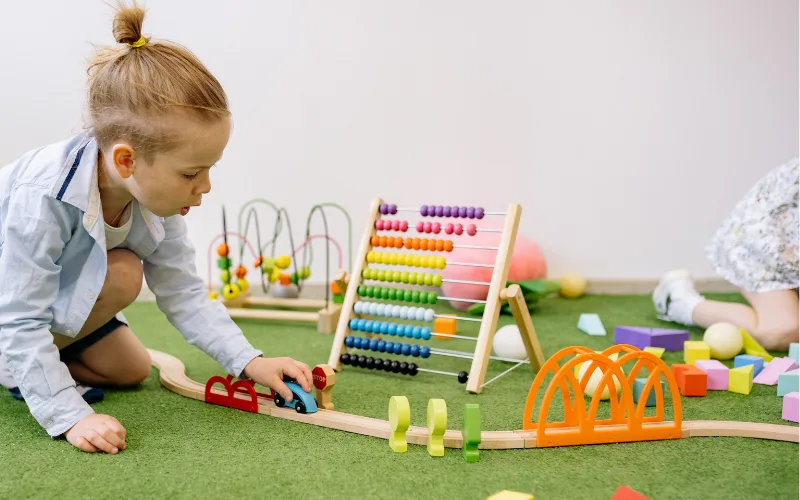
Functional play helps children to develop motor and practice skills. This kind of play is normally done with toys or objects that are stackable, can be filled with water or sand or playing outdoors. Water play or sand play is a favorite amongst pre-school children and a valuable teaching tool. This type of play can make up about 50% of the type of play that toddlers through 3year-old children practice.
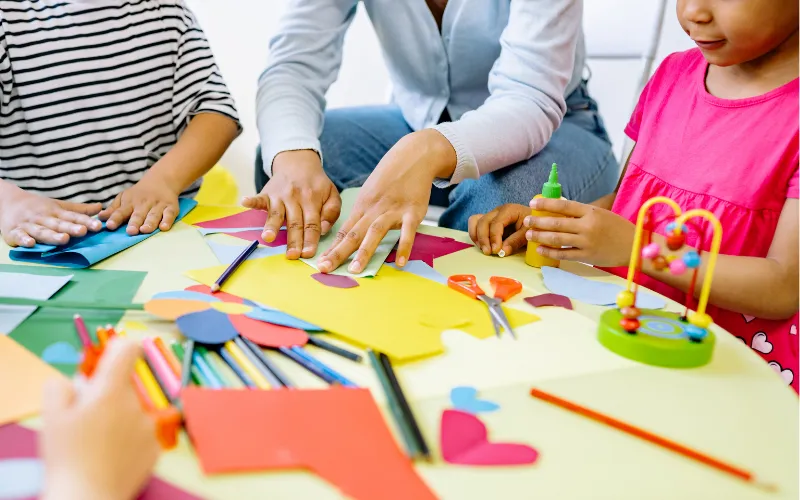
Constructive play is characterized by building or creating something. Toys that encourage this type of play are simple puzzles, building blocks, easy craft activities, and puppets. Normally 4 or 5 year old children enjoy this type of play, but it continues to be enjoyable into the first and second grades of school.

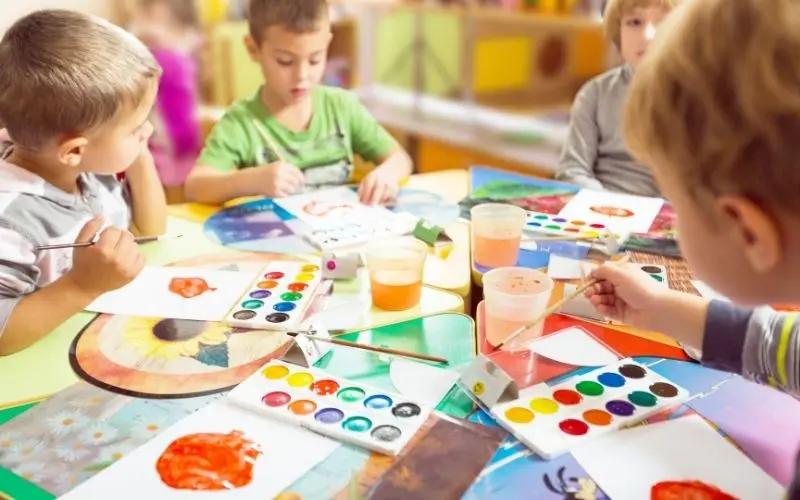
Hands and fingers are the best first art tools. Soon they will manage thick paint brushes, wedges of sponge, wax crayons, and thick chalks. It is advised to avoid rushing a child into making something in particular. Letting them do what they want encourages individuality and decision making. Toddlers also enjoy play dough because they can get hands and fingers in it for poking, rolling, and shaping. This type of play develops thinking and reasoning skills, problem solving, and creativity.

Pretend play allows children to express themselves and events in their lives. Normally a child will transform themselves or a play object into someone or something else. This type of play is popular with children in preschool and kindergarten and it tends to fade out as they enter primary school. Pretend play helps children process emotions and events in their lives, practice social skills, learn values, develop language skills, and develop a rich imagination. Because of the important skills that are developed through this type of play, efforts should be made to encourage children to pretend.
Playing games that have a definite structure or rules do not become dominant until children start to enter elementary school. Board games, simple card games, ball games or skipping games that have specific rules will teach children cooperation, mutual understanding, and logical thinking.
A playground can be a turned into a learning experience for a child. Although a playground traditionally has certain elements, these elements may pose an unsafe surrounding for your child if the equipment is not properly supervised or built of unsafe materials. A safe environment that allows gross motor activity is important for children. The following elements have been found to be unsafe in group care settings:
- Metal slides can cause burns when they are exposed to direct sunlight. The intense sunlight in a tropical climate heats metal to very high temperatures.
- Enclosed tunnel slides make observation difficult and can allow one climbing child above the enclosed tunnel to fall on top of another at the tunnel exit.
- Traditional seesaws can result in injuries when one child unexpectedly jumps off.
- Spring mounted, rocking toys with very heavy animal seats can strike a child. (There are acceptable, lighter weight rocking toy alternatives.)
- Swings, other than tire swings, can easy hit a waiting child and cause injury. Light weight plastic seat swings pose a much lower chance hurting a child.
Things to look for in a Preschool Curriculum

It is important that when considering an early education facility, caregivers and teacher in the facility have knowledge of the cultural supports for the language and literacy learning of the children and families they are serving. They need to have sufficient skills in guiding small groups of children in order to give full attention to individual young children’s language and literacy efforts. They need to be able to draw out shy children while they help very talkative ones begin to listen to others as well as to speak. Caregivers or teachers need to arrange environments that are symbol rich and interesting without being overwhelming to infants and toddlers. Even the simplest exchange becomes a literacy lesson when it includes the warmth of a relationship coupled with words, their concepts, and perhaps a graphic symbol.
To be effective, an early year’s curriculum needs to be carefully structured. In that structure, there should be three strands: provision for the different starting points from which children develop their learning, building on what they can already do; relevant and appropriate content which matches the different levels of young children’s needs; and planned and purposeful activity which provides opportunities for teaching and learning both indoors and outdoors.
If your child is between the ages of three and six and attends a preschool or kindergarten program, the National Association for the Education of Young Children (NAEYC) suggests you look for these 10 signs to make sure your child is in a good classroom.
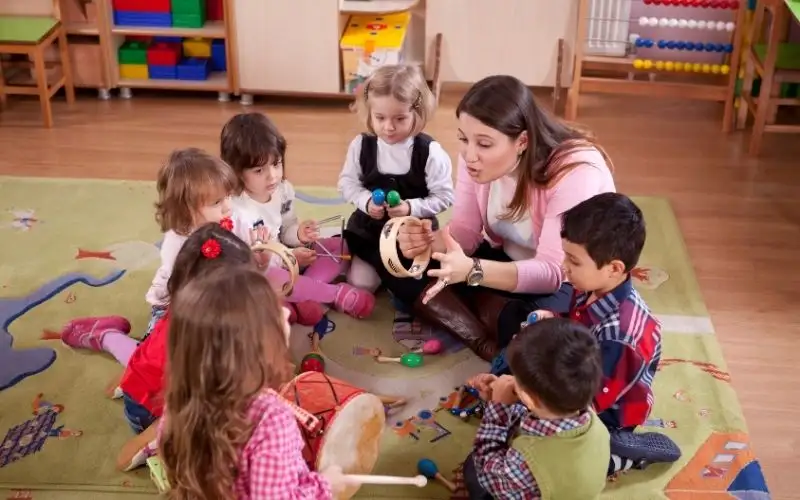
- Children spend most of their time playing and working with materials or other children. They do not wander aimlessly and they are not expected to sit quietly for long periods of time.
- Children have access to various activities throughout the day. Look for assorted building blocks and other construction materials, props for pretend play, picture books, paints and other art materials, and table toys such as matching games, pegboards, and puzzles. All the children should not necessarily all be doing the same activity at the same time.
- Teachers work with individual children, small groups, and the whole group at different times during the day. They do not spend all their time with the whole group.
- The classroom is decorated with children’s original artwork, their own writing with invented spelling, and stories dictated by children to teachers.
- Children learn numbers and the alphabet in the context of their everyday experiences. The natural world of plants and animals and meaningful activities like cooking, taking attendance or serving snack provide the basis for learning activities.
- Children work on projects and have long periods of time (at least one hour) to play and explore. Worksheets are used little, if at all.
- Children have an opportunity to play outside every day. Outdoor play is never sacrificed for more instructional time.
- Teachers read books to children individually or in small groups throughout the day, not just at group story time.
- Curriculum is adapted for those who are ahead as well as those who need additional help. Teachers recognize that children’s different backgrounds and experiences mean that they do not learn the same things at the same time in the same way.
- Children and their parents look forward to school. Parents feel secure about sending their child to the program. Children are happy to attend; they do not cry regularly or complain of feeling sick.
Photo credits: Tutor Time Early Childhood Education Center – Preschool & Kindergarten